
When the Augustinian Recollects arrived in the newly created Prelature of Lábrea (Amazonas, Brazil) in 1926, they began as a single missionary community serving from the mouth of the Purus River in the Solimões River, in what is now the municipality of Beruri (Amazonas), to the district of Floriano Peixoto, in Acre.
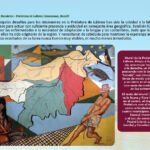
At the beginning of the Mission, most of the population lived along the banks of the Purus River and its tributaries, divided between rubber tappers and indigenous peoples. There were no large population centers, but rather much isolation, decay, precariousness, and disease.
The mission consisted of an annual sacramental visit to each rubber plantation. The “riverbank colonels” ruled the plantations with an iron fist. It was not true evangelization, lacking catechesis or a permanent presence of the Church. In the first decades, the missionaries were still discovering the territory, entering the tributaries for the first time.
The problems in formal education were initially addressed by the arrival in 1937of the Augustinian Recollect Missionaries, contemplative nuns who left their cloistered life. Illness and isolation forced them to leave only three years later, only to return permanently in 1954.
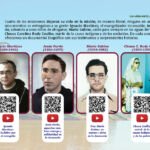
The second prelate, Friar Ignacio Martínez, died on March 16, 1942 victim of tropical diseases, at the Nova Fé rubber plantation (Tapauá). A person of great missionary zeal, he was the main reason why the Augustinian Recollects remained in Lábrea during times of great crisis and indecision.
Until the II Vatican Council, it was believed that society was at the service of the Church, and religion should prevail almost by law. There were no social questions. On a personal level, participation in sacramental life was more important than seeking conversion. Even the sacraments during religious obligations took place in the barracks of the colonels and bosses, promoters of a system of slave labor.
The third bishop, José Álvarez Mácua (1944 to 1967), structured the Prelature into four parishes: Lábrea and Canutama, which already existed, plus Pauiní (1949) and Tapauá (1949). From 1967 onwards, he secured the establishment of Marist schools in Lábrea (still in operation today), Canutama (1973-2005), and Tapauá (1974-1988).
In 1971, the period of Bishop Florentino Zabalza began (1971-1994). He implemented Vatican II and progressively opened the way for missionaries from other Provinces of the Augustinian Recollects. In 1972, the CNBB (National Conference of Brazilian Bishops) began the Sister Churches Project. Since then, the Diocese of Vitória, Espírito Santo, has continuously collaborated in evangelization, social projects, missionary work, and resource allocation.
In 1975, the first Pastoral Plan appeared, drafted by Bishop Florentino and Fr. Francisco Piérola. The parishes began to follow a unified project and objectives. Also from that year, Fr. Jesus Moraza began to organize the rural Basic Ecclesial Communities (CEBs) with the “Pastoral of the Curves,” in reference to the meanders of the Purus River.
The Basic Ecclesial Communities (CEBs) unite faith and life. The people are trained to reflect on their living conditions, assuming the role of subjects and protagonists of evangelization. Authorities are held accountable, popular movements, unions, associations, and political influence emerge. All of this forms part of the priorities set by the General Assembly of 1983.
Between 1978 and 1982, the Augustinian Recollect Missionary Sisters opened a house in Canutama, and between 1983 and 1993, the Sisters of Jesus Crucified established a house in Pauini. The Church became much more present in the lives of the people with these permanent presences of consecrated life.
In December 1983, the First General Assembly of the Prelature was held. The priorities were indigenous and land pastoral care, Basic Ecclesial Communities (CEBs), and popular movements.
In 1993, the Oblates of the Assumption arrived in Tapauá. At that year’s Assembly, the Pastoral Care of Children and the Pastoral Care of Minors (Hope Centers) were prioritized. From 1998 to 2005, the former was coordinated by nurse Joyce Terezinha, from the sister church in Vitória.
Jesus Moraza was bishop between 1994 and 2016. The first theology course for lay people, lasting three years, took place from 1997 to 1999. The second took place from 2001 to 2003. From 1995 to 2001 and between 2013 and 2020, Orly Côco, a layman from Vitória, coordinated the Pastoral work, strengthening the overall vision and mutual support among the parishes.
From 1999 to 2013, the Marian Missionaries served in Pauini. The Augustinian Recollects closed the Canutama community in 2004, and the Parish of St. John the Baptist was served by missionaries from Vitória, from the Epiphany Community, from the Diocese of Crato (Ceará), from the Missão Resgate Community, from the Dioceses of Campina Grande (Paraíba) and Ponta Grossa (Paraná), and currently by the Franciscan Friars Minor.
In 2013, a missionary area was created in Belo Monte (Canutama), served by a community of the Josephine Sisters, whose founder, Rosita Paiva, was born in the Prelature. In 2020, it will constitute the fifth parish of the Prelature, adding the district of Foz de Tapauá. It is served by a diocesan priest, two Josephine communities, and one Marist community in Camaruã to care for the indigenous people of the Tapauá River.
From 2006 to 2013, Fernando Redondo, from OCSHA (Work for Hispanic American Priestly Cooperation), coordinated the CPT (Pastoral Land Commission) of the Prelature, giving an important boost to the creation of extractive reserves and to the legal aspects of defending riverside communities.
In 2013, the Laguna Negra medical boat project began, coordinated by the Epifania Community, serving riverside communities and some indigenous communities.
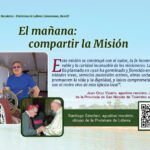
Since 2016 the Augustinian Recollect Santiago Sánchez is the bishop of the Prelature. In addition to creating the new parish, he established the new missionary area at Km 70 of the BR319 highway in Canutama. The northwestern part of the municipality thus gains permanent pastoral attention.
The 14th General Assembly (2023) implements the model of Initiation into Christian Life and adopts the agreements of the Synod for the Amazon.
In 2024, the young Thiago Mendes, originally from Canutama, became the first diocesan priest ordained in and for the Prelature of Lábrea.
The Prelature’s assemblies have modified their priorities as new challenges have arisen: family, catechesis, communication… With the Synod of the Amazon (2019), the document Querida Amazonia (2020) and the Meeting of the Churches of the Amazon in Santarém (Pará, 2022), it is understood that the mission of the Church is not necessarily to fill the churches, but rather to make the Kingdom of God grow, full life for all, justice, fraternity, peace, care for our Common Home and communion with God.