

In mid-1976, an agreement was made with the dioceses of San José and Alajuela to serve the parishes of Cristo Rey in San José, Venecia de San Carlos, San Miguel de Sarapiquí, Puerto Viejo, Río Frío and San Antonio de Belén for ten years.
Central America was marked during those years by various crises caused by earthquakes, volcanoes, and social conflict. The Church experienced all these events firsthand, some in extreme ways.
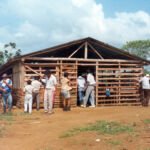
The Christ the King Parish encompassed the neighborhoods of Christ the King, Luna Park, and Carit. It had a very heterogeneous population, mostly lower middle class, with around 10% living in extreme poverty, and a small number of well-off professionals. The school was housed in prefabricated classrooms with dirt floors and no doors or glass in the windows.
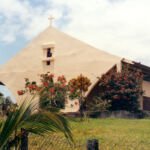
The church was under construction, and there was no residence for the community. On the first Sunday, about a hundred parishioners demonstrated with banners against handing the parish over to the Augustinian Recollects; but the atmosphere calmed down afterward.
Initial efforts focused on infrastructure: completing and furnishing the church, building the parish hall, and constructing a residence for the community. Evangelization was organized based on the documents from Medellín and Puebla, as well as the Costa Rican Episcopal Conference’s report, “Evangelization and the Social Reality of Costa Rica.” The response was promising.
Housing Committee was organized to address one of the neighborhood’s main problems. 163 vulnerable families thus obtained their own homes, while the Parish became the center for the San José Housing Committees.
Cristo Rey was known for its support of refugees, solidarity with neighborhood petitions, support for the rights of banana plantation workers, protests against rising energy prices, and support for social adaptation workers. On February 2, 1988, the parish was returned to the Diocese of San José.
The Augustinian Recollects arrived in 1977 in San Miguel, a long-established parish with surrounding communities along dirt and stone roads badly damaged by heavy timber transport, hindering their evangelizing work. From there, they served La Virgen and Puerto Viejo, where years later a community was established and Saint Augustine was chosen as its patron saint upon the creation of the parish.
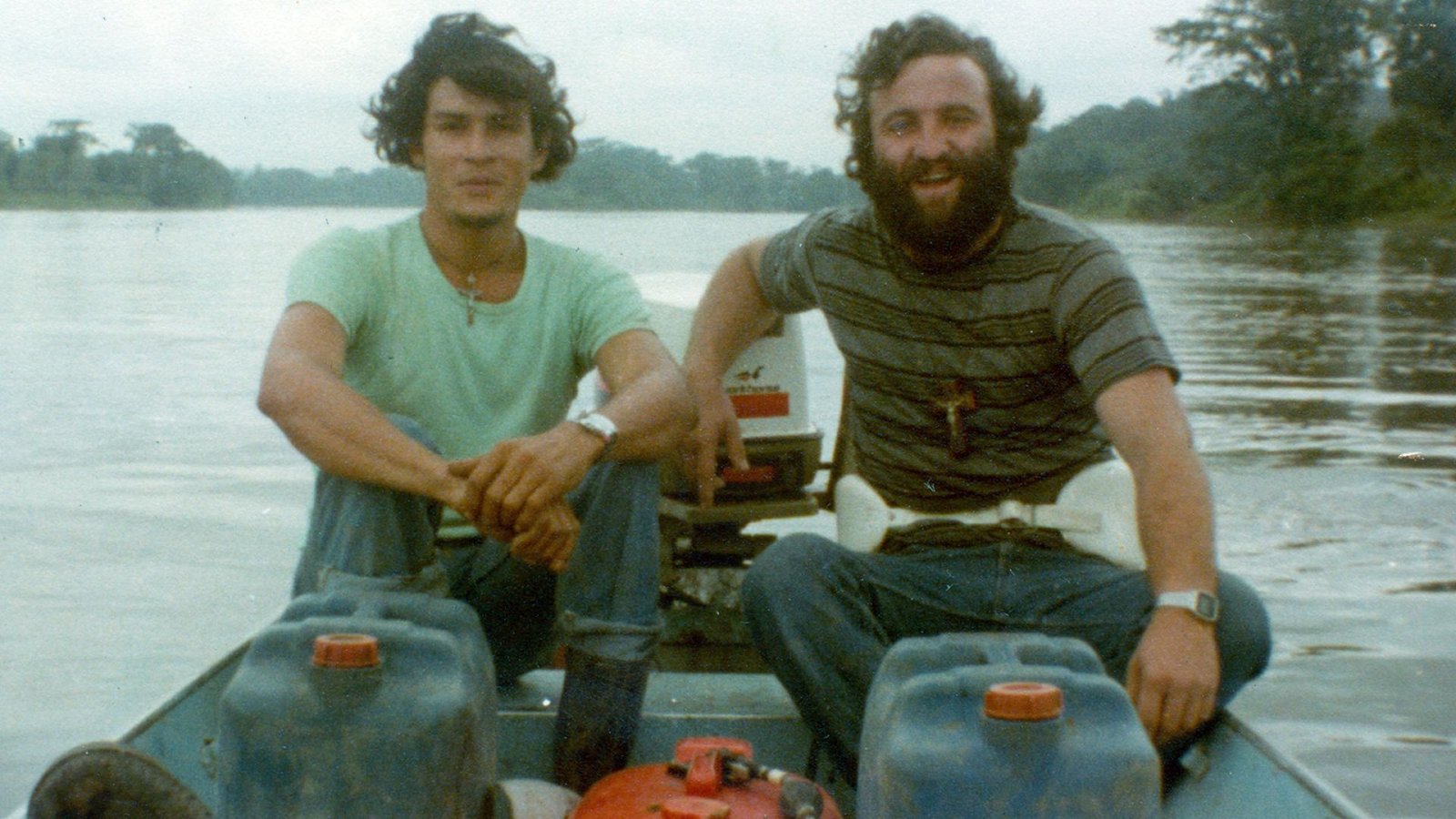
As for Río Frío de Sarapiquí, getting there wasn’t easy: you had to enter from the Central Valley, taking the route through Vara Blanca, San Miguel de Sarapiquí, La Virgen, Puerto Viejo, and passing through a pest control checkpoint manned by the Banana Company in Horquetas. The Recollects settled at Finca 6 to take charge of the Parish.
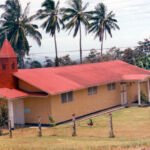
The initial plan was to serve the communities by spending a day in each town, but this system didn’t work due to the work commitments of the faithfuls. So they established their residence at Finca 6 and built a welcoming, family-friendly temple.
The religious leaders wanted to get to know the people better: their history, their needs, their struggles with multinational banana companies, and the reality of the landless squatters who had formed their own communities. Evangelization was carried out through catechists, local leaders, and pastoral agents within their own communities.
Faced with a lack of materials, the religious community prepared catechisms for the catechists in each town and compiled a common songbook for all the Recollect parishes.
Since the 1970s, the Costa Rican Church had been publicly expressing the need to divide the Diocese of Alajuela and create a new one in San Carlos. A feasibility study had been completed before 1990, and it was a demand from both the hierarchy and the people, but it didn’t come to fruition until July 25, 1995. Its first bishop was an Augustinian Recollect, Ángel San Casimiro. The faithful welcomed him with enthusiasm and built their local church with great fervor and joy.
The new Diocese’s project focused on its specific needs, including the social problems caused by open-pit mining and the reality of Nicaraguan immigration, for which the Diocese created two shelters, monitored the treatment by law enforcement, and appointed a layperson as vicar for Social Pastoral Care. Radio Santa Clara was a key diocesan tool for formation and evangelization. The Recollect bishop also built a Pastoral Center and a diocesan curia before being appointed Bishop of Alajuela in 2007.