Friar Luciano Audisio, OAR, reflects on the parable of the talents (Matthew 25:14–30) and invites us to discover that fidelity to God does not simply consist in preserving what we have received, but in daring to make it bear fruit. Through the three servants in the Gospel, Jesus reminds us that fear can paralyze our faith, while trust moves us to love, serve, and proclaim the Gospel. A reflection on the value of taking risks out of love and responding to the gifts God has placed in our hands.
The parable of the talents: God trusts us
There is a way to lose your life without doing anything that appears wrong: living in an effort not to lose anything. Not taking risks, not making mistakes, not stepping beyond what is familiar, not committing more than necessary. We can spend years protecting what we have received, convinced that fidelity consists in keeping it intact. Yet this Sunday’s Gospel presents us with a master who, on returning from a long journey, does not ask his servants how much they have preserved, but what they have done with what he entrusted to them.
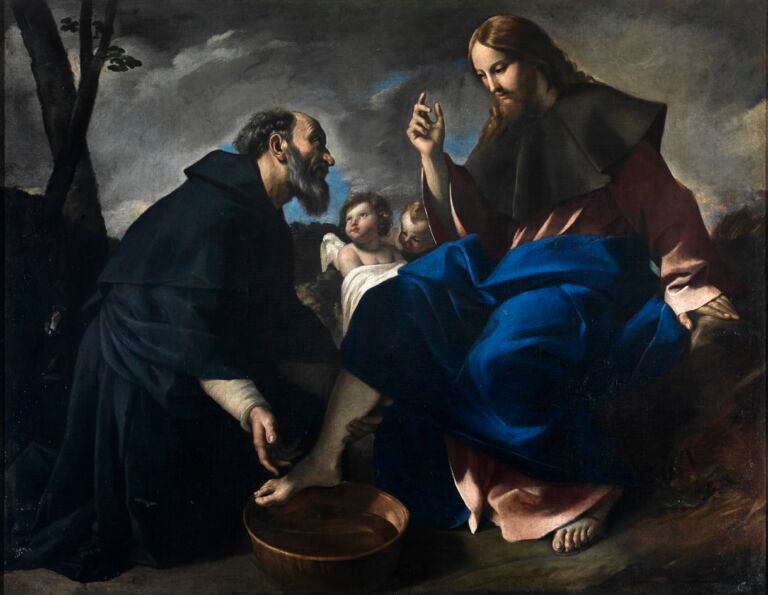
The parable of the talents begins with a surprising gesture: the master hands over his possessions to his servants and leaves. He does not leave them a detailed set of rules or tell them every step they must take. He trusts them and allows them to act. To one he gives five talents, to another two, and to another one, to each according to his ability. To grasp the magnitude of this trust, it is enough to recall that a talent was an enormous sum, roughly equivalent to the wages of fifteen or twenty years of work. Even the servant who received only one had been shown extraordinary trust.
The first lesson is that God does not treat us as incapable people who need instructions for every move. He entrusts to us life, the Gospel, the gifts we have received, and the people he places at our side. Then he gives us room to respond. Faith does not consist in waiting for God to resolve every situation, but in learning to recognize his trust and act from it. There are decisions no one can make for us, acts of love no one can carry out in our place, and opportunities to do good that will not come again in the same way.
It is striking that the first two servants receive exactly the same praise: “Well done, good and faithful servant.” One had gained five talents and the other, two. The results were different, but the master’s joy was the same. God does not compare our lives as if they were a company’s balance sheets. He does not ask us why we did not receive someone else’s gifts, nor does he demand that we produce what lies beyond our possibilities. He looks at our fidelity, the way we respond to what we have received. The problem is never having one, two, or five talents, but what we do with them.
The fear of making mistakes: when we bury our talents
The third servant forces us to pause. He did not squander the money, he did not steal it, nor did he give it to others. He buried it. And when his master returns, he can give back exactly what he had received. From a strictly legal perspective, it seems he acted prudently. But the master was not looking for a guardian to keep his estate intact, but someone who would share in his project. The servant confused fidelity with immobility, and responsibility with the fear of making mistakes.
His explanation is revealing: “I was afraid.” Behind his behavior lies a particular image of his master. He sees him as a harsh man, someone before whom any mistake can become condemnation. And so, instead of responding to the trust he received, he protects himself from the one who offered it. His fear ends up becoming a prophecy: imagining that he can only expect punishment, he lives as though the relationship with his master were already lost.
We too can relate to God in this way. We can live the faith as an obligation to be fulfilled, a list of rules we must observe, or a responsibility that weighs on our shoulders. We can be so afraid of making mistakes that we end up not daring to love, serve, proclaim the Gospel, or undertake something new. Even in the Church we can confuse fidelity with keeping things as they are, as if the Holy Spirit had been given to us solely to protect what already exists.
But the Gospel does not invite us to recklessness, nor does it despise responsibility. It invites us to discover that the trust we have received calls for a response. A talent is not preserved by burying it, but by putting it into circulation. Faith is not kept alive by hiding it, but by sharing it. A Christian community is not faithful simply because it preserves its customs, its structures, or its memories, but when it allows the Gospel to bear fruit in the concrete people of its time.
Making God’s gifts bear fruit and entering into his joy
There is an especially beautiful detail in this parable. The master does not tell the first two servants that they have achieved an extraordinary profit; rather, he invites them to enter into his joy. That is the true reward. The goal of the Christian life is not to accumulate merits to present before God, but to share in his own life, learn his way of loving, and discover the joy that is born of self-giving. Fear leads us to bury; trust sets us on the way.
Perhaps today we do not need to ask ourselves how many talents we have, but what we have buried out of fear. Perhaps it is an ability we never dared to develop, a reconciliation we keep postponing, a word of hope we did not speak, or a service we could offer and for which we always find an excuse. It is not about doing great things, but about letting the gift we have received produce life.
The Lord has entrusted us with far more than we imagine. He does not expect us to be perfect, but to trust in him enough to set out on the way. When he returns, he will not want to find us satisfied because we kept everything intact, but ready to show him a life that, because it trusted in his love, dared to bear fruit. For those who trust in God are not guaranteed an easy path, but they discover that even the risk of loving is worth it when lived in the joy of their Lord.

 Province of Saint Nicholas of TolentinoBrazil · China · Costa Rica · Mexico · Spain · United Kingdom · United StatesView province
 Province of Our Lady of CandelariaColombia · Dominican Republic · Guatemala · Panama · SpainView province
 Province of Saint Thomas of VillanovaArgentina · Brazil · Peru · Spain · VenezuelaView province
 San Ezequiel Moreno ProvinceColombia · Indonesia · Philippines · Sierra Leone · VietnamView province




Parable of the Talents: trusting in God and overcoming fear
Friar Luciano Audisio, OAR, reflects on the parable of the talents (Matthew 25:14–30) and invites us to discover that fidelity to God does not simply consist in preserving what we have received, but in daring to make it bear fruit. Through the three servants in the Gospel, Jesus reminds us that fear can paralyze our faith, while trust moves us to love, serve, and proclaim the Gospel. A reflection on the value of taking risks out of love and responding to the gifts God has placed in our hands.
The parable of the talents: God trusts us
There is a way to lose your life without doing anything that appears wrong: living in an effort not to lose anything. Not taking risks, not making mistakes, not stepping beyond what is familiar, not committing more than necessary. We can spend years protecting what we have received, convinced that fidelity consists in keeping it intact. Yet this Sunday’s Gospel presents us with a master who, on returning from a long journey, does not ask his servants how much they have preserved, but what they have done with what he entrusted to them.
The parable of the talents begins with a surprising gesture: the master hands over his possessions to his servants and leaves. He does not leave them a detailed set of rules or tell them every step they must take. He trusts them and allows them to act. To one he gives five talents, to another two, and to another one, to each according to his ability. To grasp the magnitude of this trust, it is enough to recall that a talent was an enormous sum, roughly equivalent to the wages of fifteen or twenty years of work. Even the servant who received only one had been shown extraordinary trust.
The first lesson is that God does not treat us as incapable people who need instructions for every move. He entrusts to us life, the Gospel, the gifts we have received, and the people he places at our side. Then he gives us room to respond. Faith does not consist in waiting for God to resolve every situation, but in learning to recognize his trust and act from it. There are decisions no one can make for us, acts of love no one can carry out in our place, and opportunities to do good that will not come again in the same way.
It is striking that the first two servants receive exactly the same praise: “Well done, good and faithful servant.” One had gained five talents and the other, two. The results were different, but the master’s joy was the same. God does not compare our lives as if they were a company’s balance sheets. He does not ask us why we did not receive someone else’s gifts, nor does he demand that we produce what lies beyond our possibilities. He looks at our fidelity, the way we respond to what we have received. The problem is never having one, two, or five talents, but what we do with them.
The fear of making mistakes: when we bury our talents
The third servant forces us to pause. He did not squander the money, he did not steal it, nor did he give it to others. He buried it. And when his master returns, he can give back exactly what he had received. From a strictly legal perspective, it seems he acted prudently. But the master was not looking for a guardian to keep his estate intact, but someone who would share in his project. The servant confused fidelity with immobility, and responsibility with the fear of making mistakes.
His explanation is revealing: “I was afraid.” Behind his behavior lies a particular image of his master. He sees him as a harsh man, someone before whom any mistake can become condemnation. And so, instead of responding to the trust he received, he protects himself from the one who offered it. His fear ends up becoming a prophecy: imagining that he can only expect punishment, he lives as though the relationship with his master were already lost.
We too can relate to God in this way. We can live the faith as an obligation to be fulfilled, a list of rules we must observe, or a responsibility that weighs on our shoulders. We can be so afraid of making mistakes that we end up not daring to love, serve, proclaim the Gospel, or undertake something new. Even in the Church we can confuse fidelity with keeping things as they are, as if the Holy Spirit had been given to us solely to protect what already exists.
But the Gospel does not invite us to recklessness, nor does it despise responsibility. It invites us to discover that the trust we have received calls for a response. A talent is not preserved by burying it, but by putting it into circulation. Faith is not kept alive by hiding it, but by sharing it. A Christian community is not faithful simply because it preserves its customs, its structures, or its memories, but when it allows the Gospel to bear fruit in the concrete people of its time.
Making God’s gifts bear fruit and entering into his joy
There is an especially beautiful detail in this parable. The master does not tell the first two servants that they have achieved an extraordinary profit; rather, he invites them to enter into his joy. That is the true reward. The goal of the Christian life is not to accumulate merits to present before God, but to share in his own life, learn his way of loving, and discover the joy that is born of self-giving. Fear leads us to bury; trust sets us on the way.
Perhaps today we do not need to ask ourselves how many talents we have, but what we have buried out of fear. Perhaps it is an ability we never dared to develop, a reconciliation we keep postponing, a word of hope we did not speak, or a service we could offer and for which we always find an excuse. It is not about doing great things, but about letting the gift we have received produce life.
The Lord has entrusted us with far more than we imagine. He does not expect us to be perfect, but to trust in him enough to set out on the way. When he returns, he will not want to find us satisfied because we kept everything intact, but ready to show him a life that, because it trusted in his love, dared to bear fruit. For those who trust in God are not guaranteed an easy path, but they discover that even the risk of loving is worth it when lived in the joy of their Lord.
Related posts
The EDUCAR Network Spain jointly prepares its 2027 international gathering
The Augustinian Recollect schools of Spain are preparing the VIII EDUCAR Gathering, which will bring together educators from March 1 to 5, 2027, in Guadarrama.
“What if God is calling me?”: The Augustinian Recollects premiere a documentary on vocation
The Augustinian Recollects premiere “What if God is calling me?”, a documentary about five young men seeking their vocation and discovering religious life.
The Prior General continues his renewal visit to Venezuela amidst fraternity and mission
The Prior General of the Augustinian Recollects shares his renewal visit to Venezuela, with fraternal meetings in Maracaibo, Tamare, and Barquisimeto.