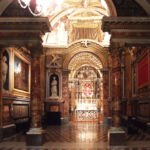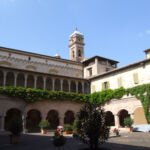

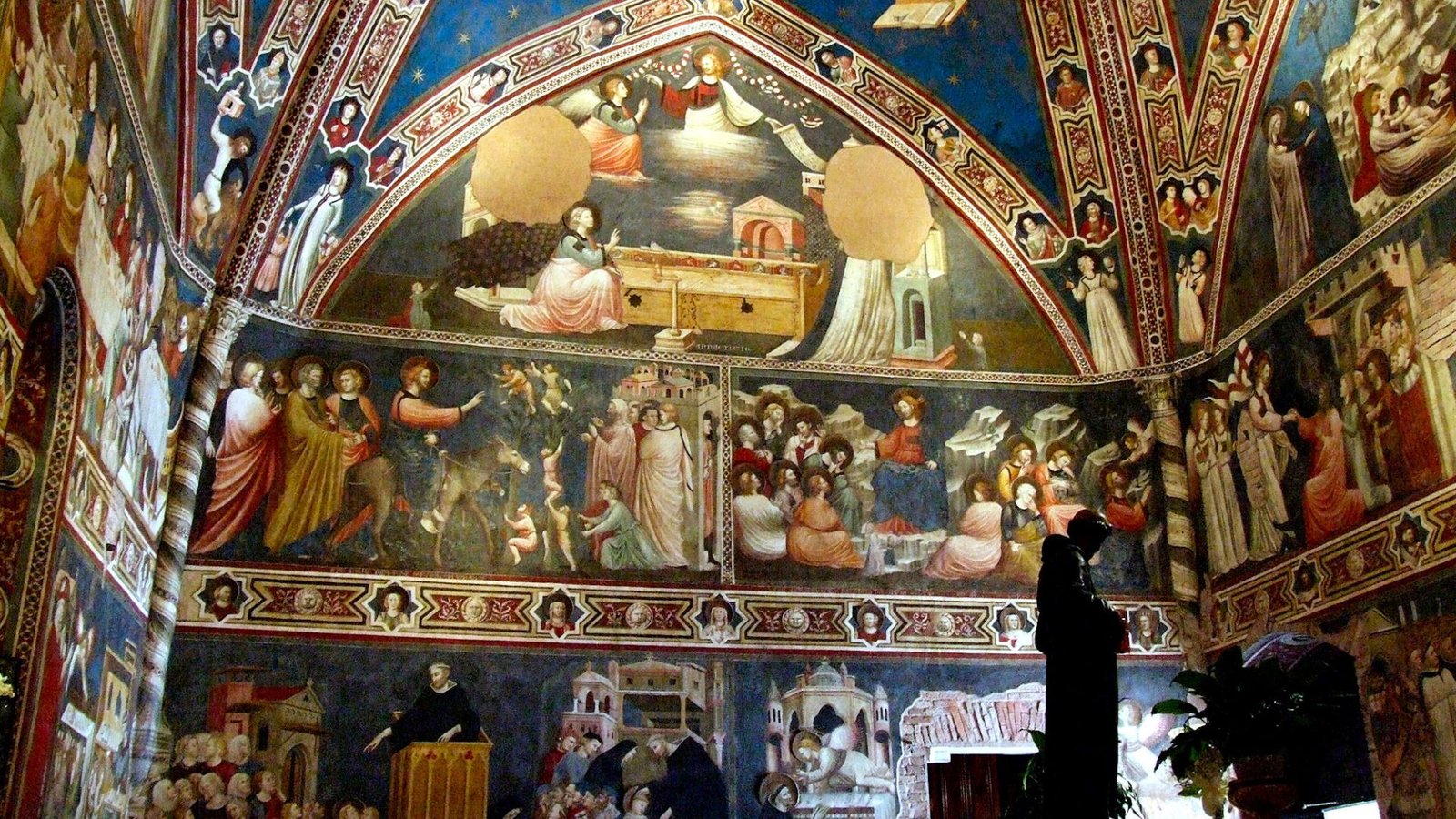
The pilgrim, tourist or devotee who arrives in Tolentino, in the Italian region of Marche, is filled with awe at the splendid temple dedicated to Saint Nicholas: its imposing marble facade dazzles from the outside and, inside, the coffered ceiling or the side chapels filled with paintings and decoration.
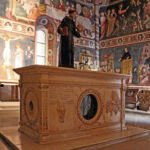
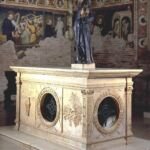
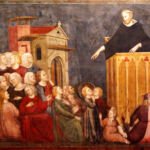
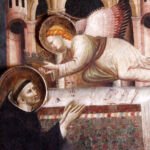
In the large chapel, or ‘Cappellone,’ one’s admiration is heightened by the murals attributed to Giotto, which recount the life and miracles of the humble Nicholas. Right in the center stands a 15th-century mausoleum, a stone reliquary with round windows on either side, and above it, a life-size statue of Nicholas casually holding a book while admiring the sun-like star in his left hand. An ancient inscription claims it contains the saint’s body, but this is not the case: the reliquary has always been empty.
The tourist enjoys the art, but the devotee is bewildered: where is Saint Nicholas? You have to leave the Cappellone and go down a wide side staircase to a crypt, a strange and complicated route, as were the vicissitudes suffered by the relics.
Upon his death in 1305, Friar Nicholas was buried in a wooden chest. His relics attracted crowds and transformed the entire region socially and economically. The treasure, not only spiritual, also attracted thieves. One night in 1345, two supposed German monks attempted to steal the relics and cut off his arms to take them. To their surprise and everyone’s astonishment, they abandoned the attempt, betrayed by the blood that flowed ceaselessly from the arms.
But alarm bells rang at the possibility of losing the saint’s body. The Augustinian community took turns ensuring that a friar was always on guard. The Cappellone was built, and in 1474 the marble reliquary, a gift from Pietro Mellini of Rome, and the statue were placed in the center. But the saint’s remains were never placed inside. Instead, sick devotees entered the reliquary seeking healing.
The main object of devotion was the severed arms, placed in a veritable safe in the Chapel of the Holy Arms. To prevent further attempts at theft, the body was buried with such secrecy that even the Augustinians… They forgot the exact location!
Between 1855 and 1856, after 138 inquiries, the Augustinians, already in hiding, privately excavated to locate the remains, but without success. This continued until February 4, 1926, when the exhaustive investigation by the Augustinian friar Saturnino López led to the discovery. The statue was removed, the reliquary dismantled, and several tunnels appeared beneath its base, one of them vertical, leading to a tomb containing the saint’s remains, some coins, and part of a cilice.
Following a canonical process with some thirty witnesses and numerous documents, on July 26, 1928, the verdict was affirmative and unequivocal: “The authenticity of the remains is confirmed.” On September 14, 1930, the splendid silver reliquary arrived in Tolentino to house all the Saint’s remains together, including his arms. It was placed in a new chapel inaugurated in September 1932 on the very spot where Saint Nicholas had been hidden for six centuries and where now, indeed, pilgrims can encounter them.