
Friar Antonio Carrón de la Torre, General Councilor and head of the EDUCAR Network, closed the 32nd edition by thanking the teaching commitment and reminding that the person must always be at the center.
“Thank you”: a word born from the heart
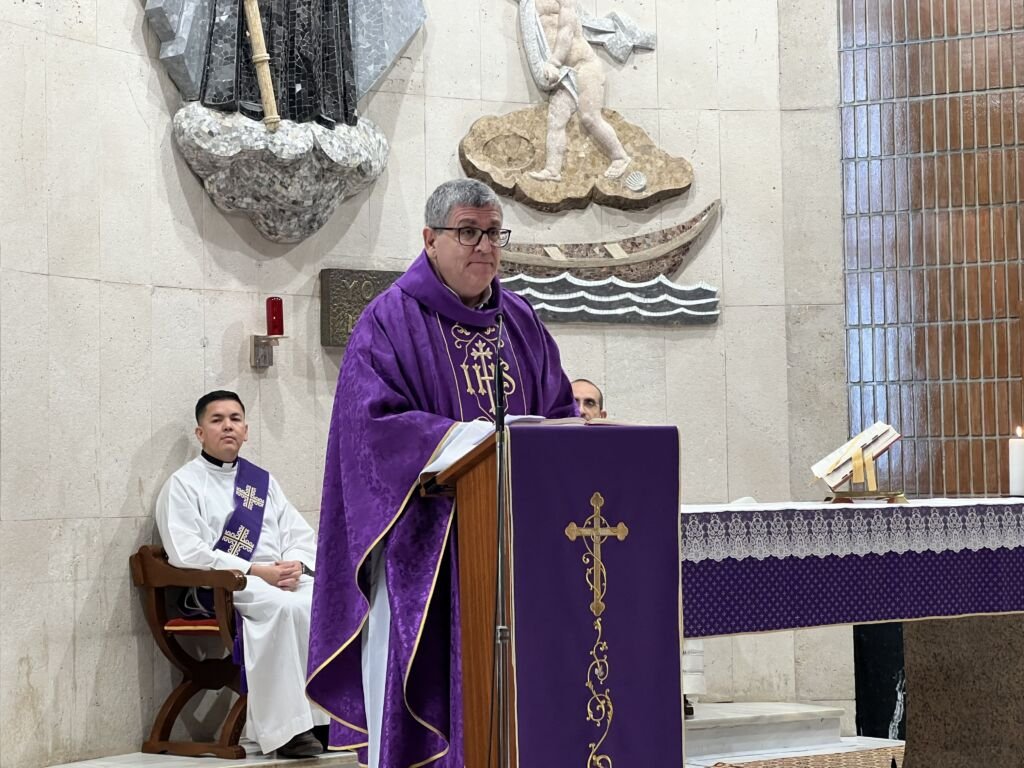
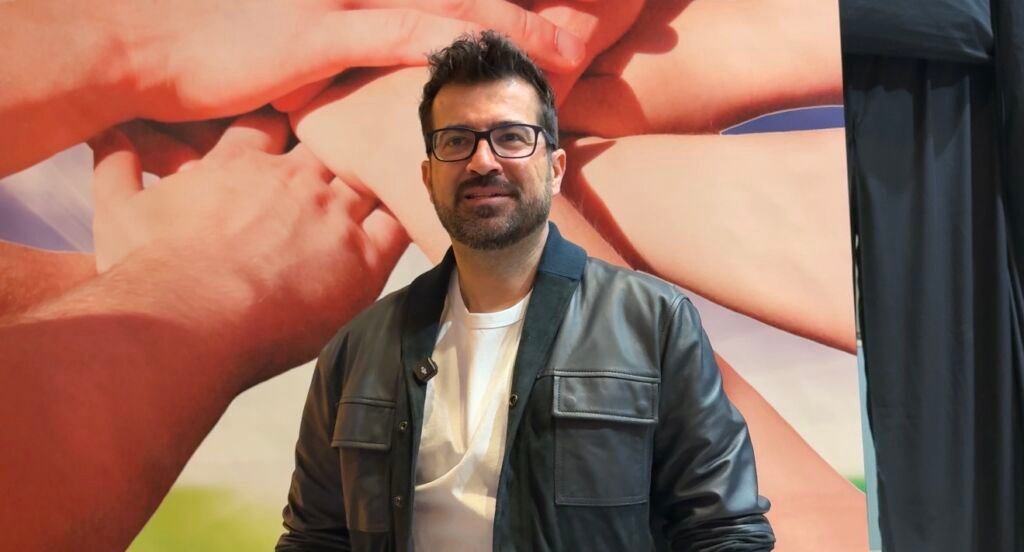
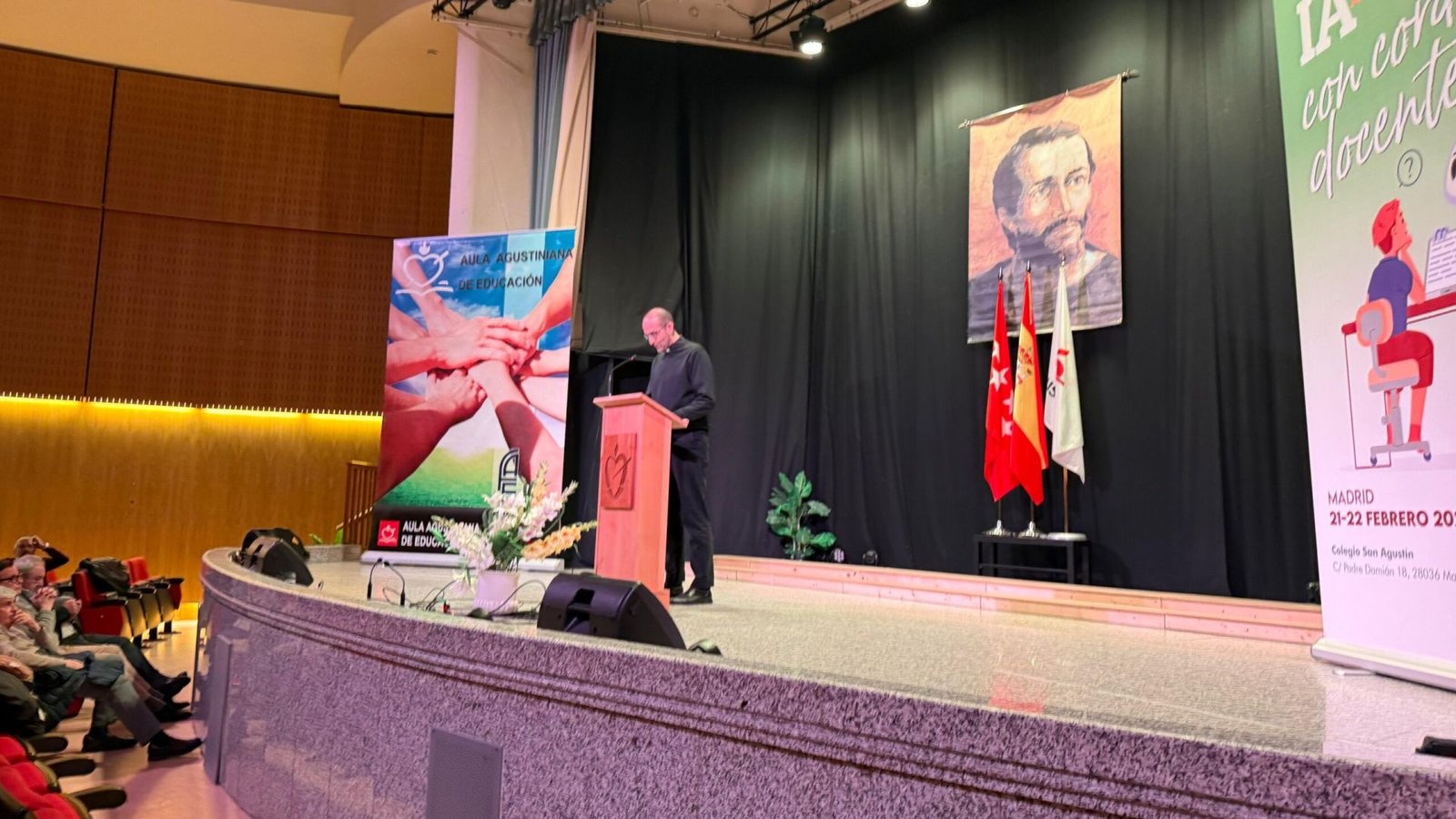
At 12:08 PM, Friar Antonio Carrón de la Torre, General Councilor of the Order and head of the EDUCAR Network, was in charge of closing the 32nd Augustinian Education Forum.
His first words set the tone for the farewell: “Thank you”. A gratitude that, as he pointed out, is born from the heart after more than three decades of a shared journey. Year after year, this meeting of the Augustinian educational family has become a sign of communion, shared vision, and renewed momentum for those who live education as a true vocation.
The General Councilor especially thanked the constant work of the organizing committee and the presence of those who traveled from afar to participate in this edition, highlighting the international and fraternal character of the Forum.
A new context: artificial intelligence and teaching
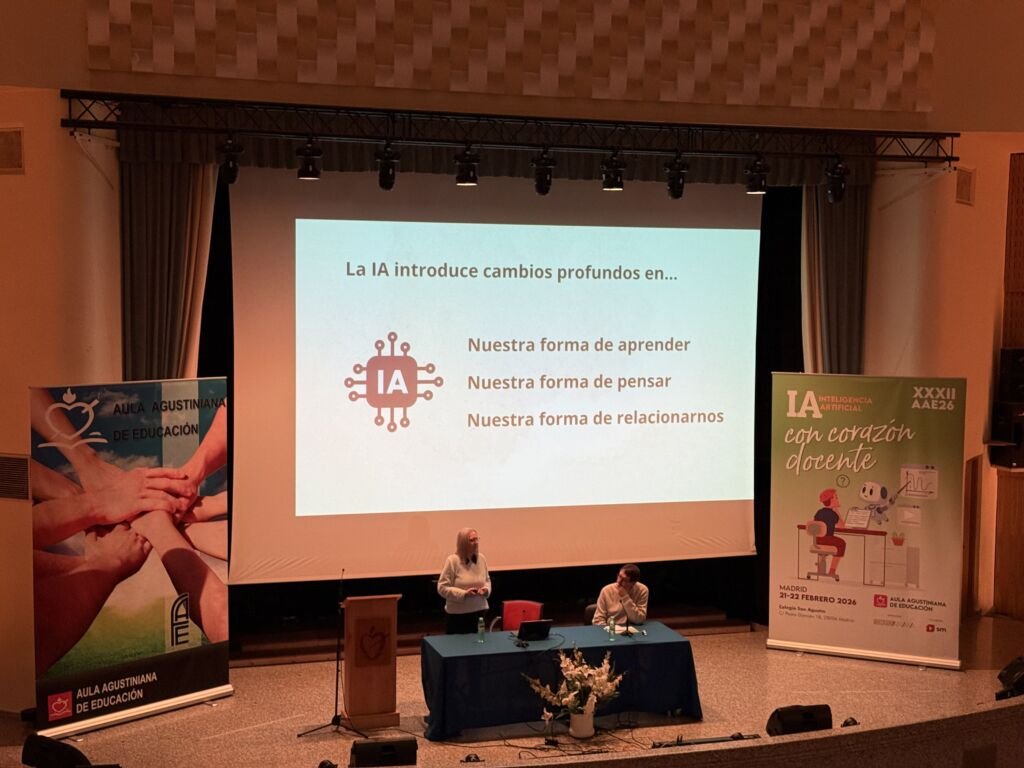
The 32nd edition had a particular nuance: being held at a historical moment in which the Church actively reflects on artificial intelligence and its ethical and social implications. Friar Antonio recalled how the Pope has insisted that, in the face of this new technological revolution, the person must always remain at the center.
Artificial intelligence—he stated—is an instrument, a tool at the service of the human being. And educators have a decisive task: to train those who will use that technology.
“Let us not lose our way: the important thing is the person, not the tool.”
During these days, the various presentations have shown that we are not facing a passing fad, but a profound transformation in the way of teaching and learning. The challenge is not to decide whether AI will be used or not, but how to integrate it pedagogically with responsibility, professional competence, and ethical criteria.
Artificial intelligence and the teaching heart
Returning to the theme of the edition—artificial intelligence and pastoral heart—Friar Antonio stressed that no technology can replace the human experience of encounter.
An algorithm can process data, but it cannot touch the heart.
A digital tool can generate content, but only a teacher can recognize a restless gaze.
An automated system can analyze results, but only an educational community can form people who are free, supportive, and open to transcendence.
Education, he recalled, is not a mere transmission of information: it is integral formation. It is not just technique, it is harmony. It is not just innovation, it is a living tradition that is passed down from generation to generation.
From the spirituality of Saint Augustine, teaching is born from the restless heart that seeks the truth. Therefore, in the face of technological advances, the mission is not to resist change or to absolutize it, but to discern it.
Three keys to integrating AI
In the final part of his speech, he proposed three dimensions to properly integrate artificial intelligence into our centers:
Educating for AI, developing critical and ethical skills.
Educating about AI, understanding its operation and applications.
Educating with AI, integrating it as a tool that improves teaching and learning processes.
Always, he stressed, avoiding the “divinization” of tools and remembering that the foundation of the Christian educational mission is Jesus Christ, the way, the truth, and the life.
The future is written in the classroom
The closing was, more than an end, a sending forth. The future of education will not be decided solely in technological laboratories, but in the classrooms where a teacher continues to believe that each student is unique, unrepeatable, and called to something great.
“Let us continue to educate with intelligence,” he concluded, “and let us continue to educate with heart.”
With that horizon, the 32nd Augustinian Education Forum says goodbye by reaffirming its commitment: to integrate innovation and humanity, technique and ethics, progress and transcendence, without ever losing sight of the fact that the person is the center and the reason for all educational tasks.