
At the beginning of a new year, the liturgy does not limit itself to formulating good wishes, but offers us something deeper: the blessing of God. In this commentary on the Gospel, Friar Luciano Audisio invites us to contemplate the fragility assumed by God in the Incarnation, the motherhood of Mary, and the filial identity that sustains our life beyond successes or failures.
God’s blessing at the beginning of the year
Happy New Year! We have heard these words repeated a thousand times since midnight yesterday. But what does “Happy New Year” really mean? What do we wish for when we say these words? Often it is a generic wish: that everything goes well, that there is health, that problems are solved. But today’s liturgy offers us a much deeper, much truer wish: it offers us the blessing of God himself.
The first reading has made us hear the oldest words of blessing we know, those from the book of Numbers: “The Lord bless you and keep you; may his face shine upon you and grant you his favor. May the Lord show you his face and grant you peace.” This blessing crosses three thousand years of history and is still alive, still true, still effective.
But what does it mean to be blessed by God? It is not a magic formula that automatically solves problems. To be blessed means to know that we are not alone. It means knowing that there is Someone who protects us, who makes his face shine upon us, who looks at us with love. And this “Someone” is not an abstract idea or an impersonal force. It is the God we celebrate today as born of a woman, born of Mary.
Mary, Mother of God and the fragility of the Incarnation
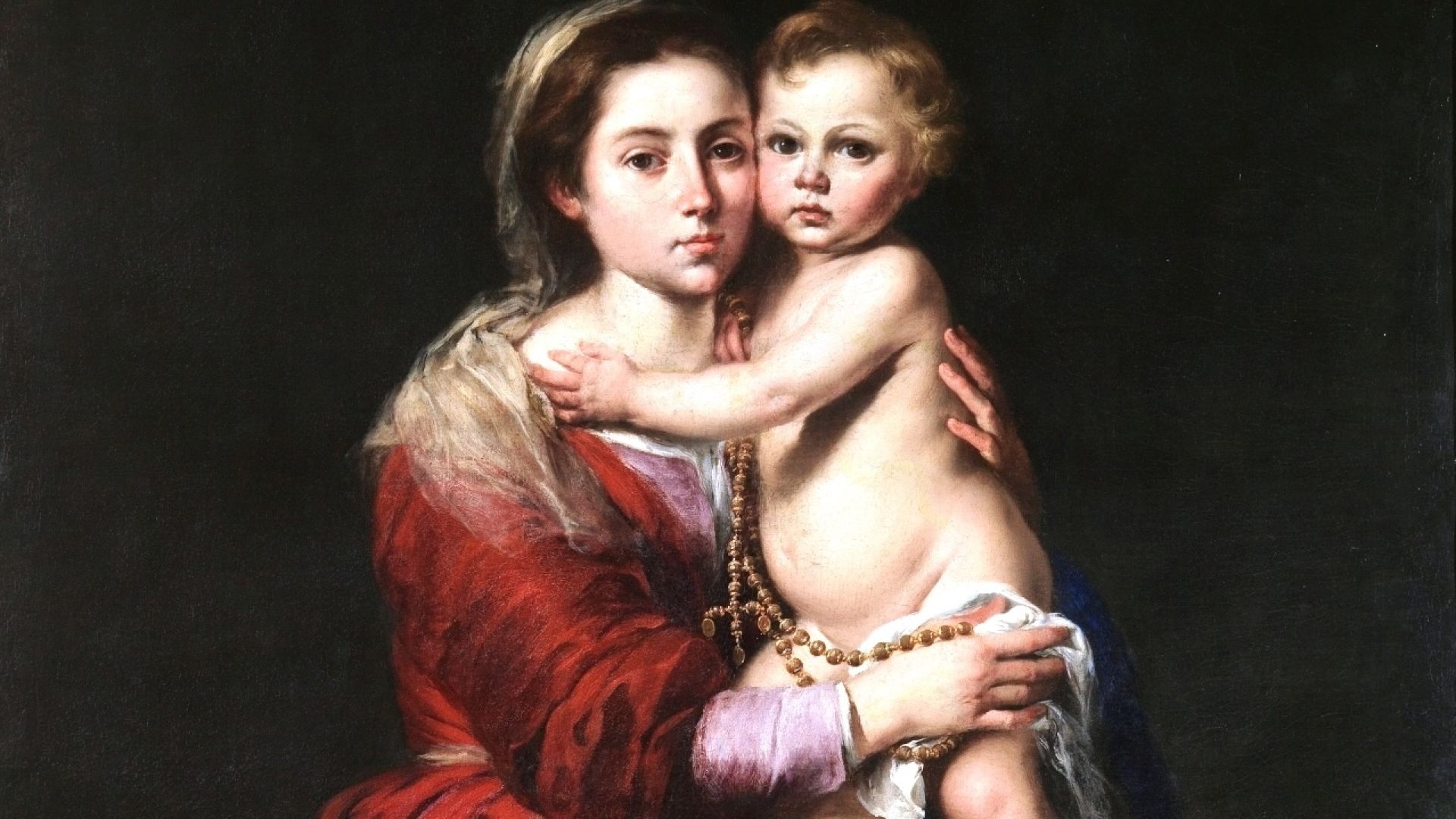
The Gospel takes us back to the grotto of Bethlehem. The shepherds arrive and find “Mary and Joseph, and the child.” This scene is the heart of our faith: God became a child, became one of us. And he did it through Mary, whom the Church today solemnly proclaims “Mother of God.”
This truth is revolutionary. When we say that Mary is the Mother of God, we are not paying Mary a compliment. We are saying something about God: God wanted to depend on a human creature. He wanted to need a mother. He wanted a woman to give him life, nourish him, care for him, educate him.
The Creator of the universe needed Mary’s milk to survive. He who sustains the cosmos needed Mary’s arms to be carried. He who is the eternal Word learned to speak by listening to Mary’s voice. This is the mystery of the Incarnation: God was not ashamed to be fragile, small, dependent.
And what does this tell us at the beginning of a new year? It tells us that fragility is not the opposite of greatness. It tells us that needing others is not a weakness but is human. We live in a culture that tells us to always be strong, always efficient, always self-sufficient. But the Incarnation reveals another path to us: the path of welcomed vulnerability, of recognized dependence, of shared fragility.
How many in this year that begins will feel fragile? How many will need help, support, to be heard? Let us not be ashamed of this fragility. It is human. God himself assumed it. God himself became small and needy in Mary’s arms.
Children of God: guard, meditate and welcome Jesus who saves
Saint Paul in the second reading has revealed to us the profound meaning of all this: “God sent his Son, born of woman, born under the Law, to redeem those who were under the Law, so that we might receive adoption as sons.” Here is God’s plan: to make us his children.
We are not simply creatures of God. We are children. And the difference is enormous. A creature is something that God has made. A child is someone whom God loves with the love of a Father. A creature can be replaced. A child is unique, unrepeatable, irreplaceable.
Paul continues: “God sent the Spirit of his Son into our hearts, crying out, ‘Abba, Father!’” This is the Christian novelty. We can call God “Abba,” “Dad.” Not out of presumption, not because we have deserved it, but because the Holy Spirit shouts this in the depths of our hearts.
Dear brothers, at the beginning of this new year, this is your truest identity: you are children of God. You are not your bank account, you are not your job, you are not your successes or your failures. You are children loved by the Father. This is the identity that no one can take away from you, no matter what happens in 2026.
And look at Mary. The Gospel tells us that she “kept all these things, meditating on them in her heart.” Mary did not understand everything immediately. She too had to make a journey. She had to put together the words of the angel, the birth in poverty, the shepherds who told of celestial visions. How did all this come together?
Mary kept and meditated. She did not seek immediate answers. She did not pretend to understand everything immediately. She kept the events of her life in her heart and reread them in the light of faith, seeking to understand what God wanted to tell her.
This is a precious teaching for us who are starting a new year. We live in a time of immediate answers, of everything now. But the spiritual life requires time, patience, inner silence. It requires keeping the events—good and bad—in our hearts and seeking to understand their profound meaning.
Perhaps in the past year you have experienced situations that you still do not understand. Perhaps there are wounds that have not healed, questions that have no answer, pains that weigh. Mary teaches us not to discard anything, but to keep everything in our hearts, with the confidence that one day the meaning will be revealed, that God is weaving a design even through what seems to us only pain or failure.
The Gospel ends with the imposition of the name: “They named him Jesus, as the angel had called him.” The name is not just a label. In the biblical world, the name reveals identity and mission. And “Jesus” means “God saves.” That child that Mary has in her arms came to save, not to condemn. He came to seek, not to reject.
At the beginning of this year, perhaps some of you feel far from God. Perhaps someone thinks that they have made too many mistakes, that they have strayed too far. But look at that child in the manger: he came precisely for you. He is called “God saves” because he came to seek those who have been lost, to lift up those who have fallen, to forgive those who have made mistakes.
The blessing with which we began this reflection – “May the Lord make his face shine upon you” – has been fulfilled. The face of God has shone for us in the face of that child. And through the Incarnation, our face has also become precious, sacred, the image of God.
When this year you meet someone – in family, at work, in the street – remember that you are meeting someone who carries the image of God. Someone for whom Christ became man. Someone who deserves respect, dignity, love.
Let us entrust this year that begins to Mary, Mother of God and our Mother. May she who kept the mystery in her heart, who followed the Son in each stage of his life, accompany us in this new time. As she gave birth to Christ in the flesh, may she continue to generate him in our hearts through faith.
May this truly be a good year: not because everything is going to go well, but because we will know how to recognize in each day the presence of God who protects us, blesses us, directs his face of love towards us.
Happy year to all, in the name of Jesus, the God-with-us.