

In the news, although sometimes overshadowed by other issues deemed more urgent by the media, we have seen the presence of world leaders and government delegations at COP30 in Belém do Pará, Brazil. Even more striking have been the demonstrations by indigenous peoples and by scientists and NGO members demanding that governments and corporations take action to curb global warming.
Less conspicuous and without much fanfare, missionaries and a multitude of Catholic spiritual families present in the great Amazon and in so many places in the world where the climate emergency attacks the most disadvantaged have also participated: Franciscans, Jesuits, Comboni Missionaries, Dioceses with their bishops, Cardinals, lay movements … and also the Augustinian Recollect Family.
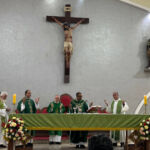
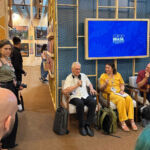
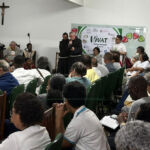
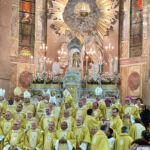
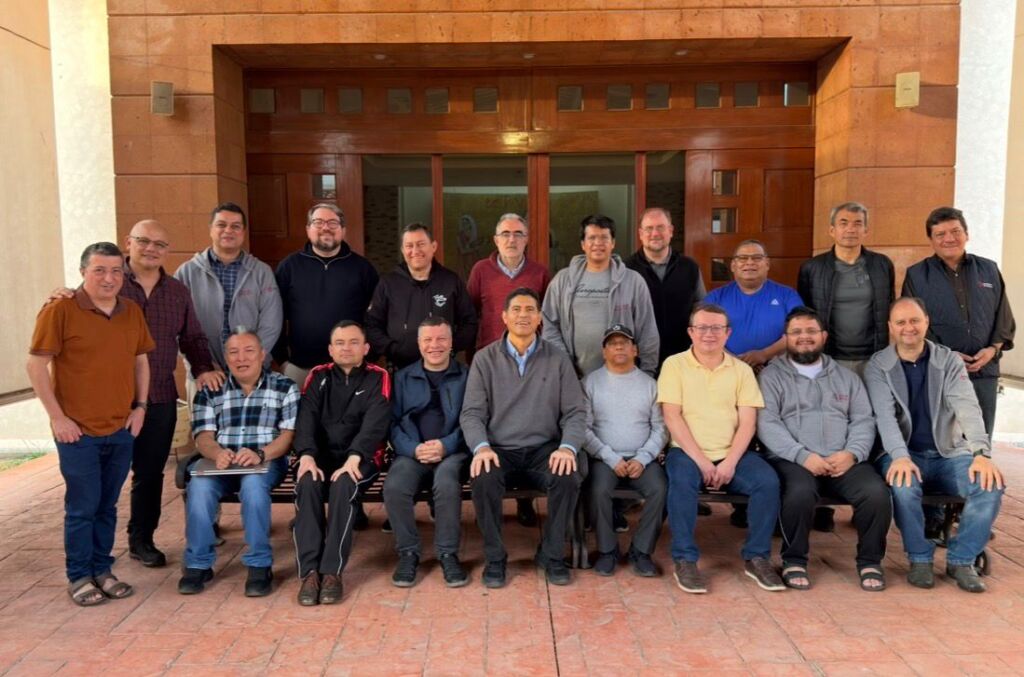
Represented by its International Solidarity Network, ARCORES, the Augustinian Recollect Family has participated in events organized by or alongside COP30: the Summit of Indigenous Peoples, the Laudato Si’ debate panel, prayer and celebration gatherings, reflection and dialogue with other organizations and institutions…
For the Catholic Church, Mother Earth is also the Common Home, or Creation, of which humankind is the custodian, caretaker, and protector by mandate of the Creator. And for the Catholic Church, the most vulnerable and excluded are the face of God, and they are the first victims and the first to suffer the consequences of the avaricious mistreatment of the planet. They are the first to be affected by floods and droughts, deforestation, and water and air pollution.
The Church knows about rethinking our way of being and living in this Common Home. Development without sustainability is bread for today [only for a few], but tomorrow it means hunger and disease [for everyone]. Greed is the cause of the situation humanity has brought upon itself. And Saint Augustine already warned about this problem almost 1,700 years ago: “Let us possess earthly things without letting them possess us.”
Order, that “correct arrangement of things, by virtue of which each occupies its proper place,” (St. Augustine) applied to the management of Nature, is one of the solutions to the climate emergency. It is not about dominating nature from above, but about living in harmony with it consciously and preserving life.
And order has a consequence for Saint Augustine: “The peace of all things is the tranquility of order.” From the harmony in Creation arises true peace, a meaning greater than immediate gains and profit based on destruction.
Saint Augustine makes a provocative distinction: “Who are the peaceful ones? Not the pacifists, but the promoters of peace.” For those who follow his thinking, translated to today’s situation, it could be said that it is not enough to be against destruction, but that it is necessary to actively build a better world, to demand justice, and to promote order for the survival of ecosystems and peoples.
At COP30, the great issues facing humanity were debated. The Catholic Church added a spiritual argument to the technical, scientific, and social arguments for its involvement in the fight to care for our common home: caring for all living beings and the places they inhabit is an integral part of the Christian vocation.
And in the case of those who follow Saint Augustine of Hippo, it is also part of Augustinian spirituality, which places that emphasis on the correct order of things, on peace as an indispensable goal, and on community and cooperation as the most intelligent and happy way of life.
The Church, at COP30, also said that caring for our common home is sacred; that environmental justice is divine justice; that supporting the most disadvantaged and those who suffer most from natural disasters is promoting the Kingdom of God.
The Augustinian Recollect Family has been present where the life of the planet is at stake, where people cry out for justice, where governments and corporations—those who exploit nature for profit—must be held accountable for their actions and decisions. One of the participating ARCORES members noted:
“I never imagined there was so much commitment in Consecrated Life and in the Church in general in this area. I believe the Church is strengthened by accompanying the poor and vulnerable. I hope we don’t forget that.”