


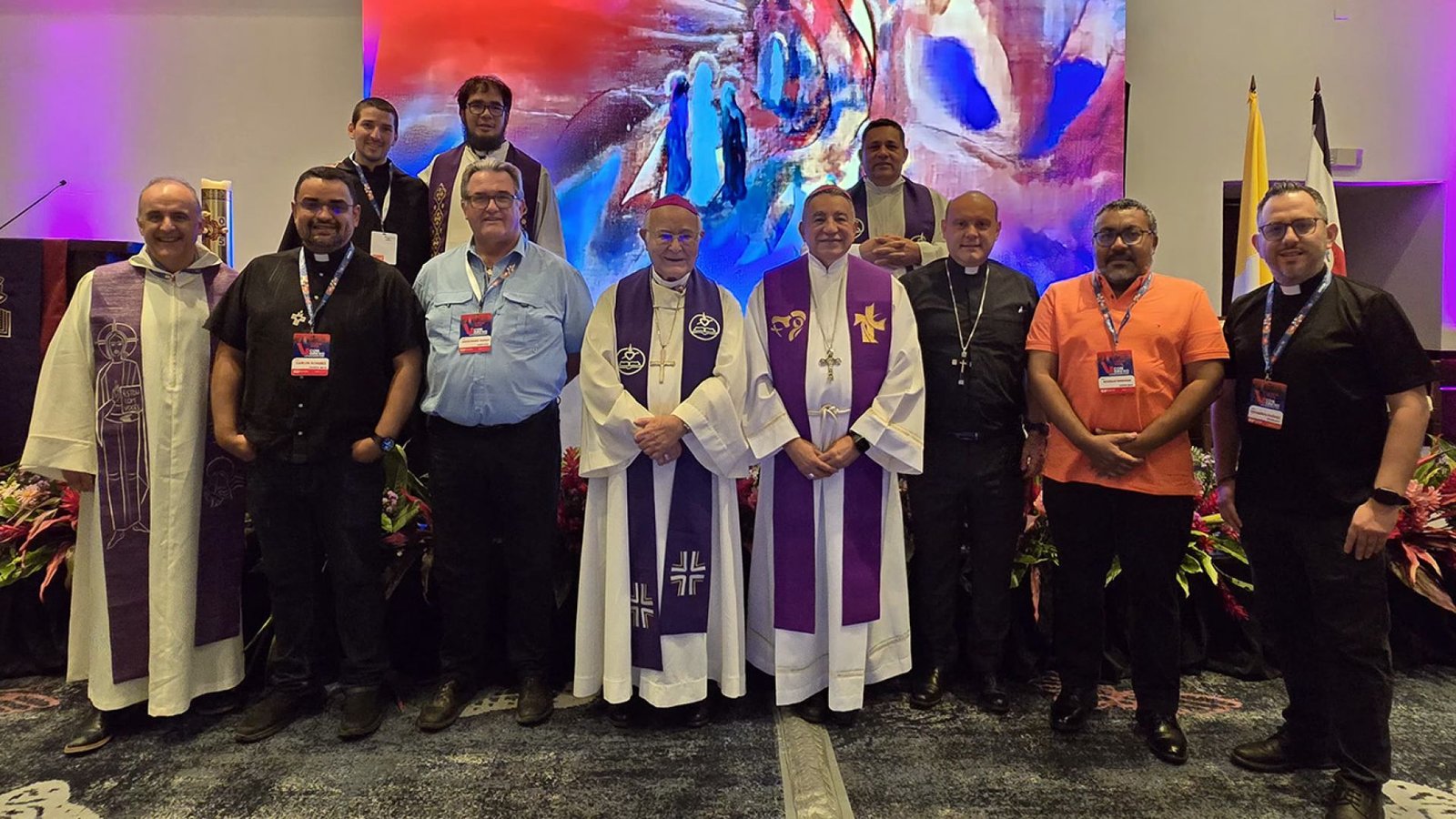
The Interdisciplinary Research and Training Center for the Protection of Minors (CEPROME) is a Latin American organization focused on the prevention of sexual abuse and the creation of safe environments within the Church and society.
Established ten years ago, CEPROME offers training and support protocols to institutions upon request. It has already organized five conferences, held in Mexico, Paraguay, Panama, Peru, and most recently in Costa Rica from March 3-5.
These Congresses share and improve the processes of accompaniment and reparation, that is, how to provide a warm and welcoming presence in the face of a painful situation so that each victim and their environment can resume their lives, as well as facilitating reparation of the damage caused by action or omission.
In 2026, the Congress focused on the comprehensive approach to care and reparation, mental health, legal advice, pastoral support, active listening, healing processes, and concrete testimonies of reparation.
Eight symposia, six conferences, and one roundtable discussion explored legal, canonical, and juridical aspects, victims’ rights, the pastoral and spiritual dimension, techniques and therapies, innovation and best practices, and the role of communities and support networks. An exhibition also featured materials, tools, success stories, and real-life accounts, highlighting the use of culture and art in raising awareness and networking opportunities.
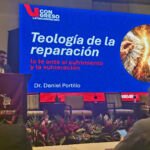
The speakers and lectures were: Carlos Álvarez, “God Present: Theology of Reparation in a Time of Wounds”; María Inés Franck, “Is it Possible to Repair Abuse? The Concept of Reparation in the Church”; Lydia Troya, “Accompaniment and Restoration: Being There for the Other on the Journey”; Pilar Ramírez, “Consolation that Restores: Pastoral Care of a Church that Knows How to Listen”; Andrea Giovita, “Right to Reparation: Foundation, Demands and Current Challenges”; and Daniel Portillo, “Theology of Reparation: Faith in the Face of Suffering and Violation”.
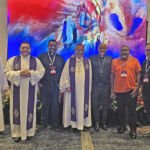
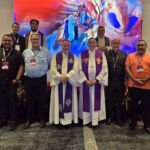
The Augustinian Recollect Family was present at the Congress. The religious community of the Boys’ Town participated almost entirely, as it was a particularly sensitive topic for their mission. Augustinian Recollect Simón Puertas, from ARCORES Brazil, also traveled to Costa Rica.
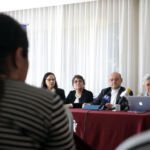
The Augustinian Recollect bishop Francisco Javier Acero, auxiliary bishop of Mexico City and member of the Council of CEPROME Latin America, was one of those in charge of presenting the Congress to Costa Rican society and ecclesial media on October 3.
In the press conference, he emphasized that “the credibility [of the Church] is not recovered through speeches, but through verifiable processes.” He affirmed that the Church’s position is clear: alongside the victims and against abusers and those who cover them up. He explained the key elements of comprehensive reparations: recognizing dignity and truth, applying restorative and healing justice, assuming responsibility and commitment to reparations, offering guarantees of non-repetition, and carrying out public acts for historical memory and the rebuilding of trust and the social fabric.
Pope Leo XIV sent a message to the Congress, reminding it that it “touches on one of the deepest and most painful wounds” of the Church. The Congress “expresses in a concrete way the commitment of the Church” and the path to reparation does not lie in “formal compliance” but in “a true conversion to justice: personal, pastoral, and institutional.”
Embracing this commitment makes the Church “more credible, more humane, and more evangelical.” Protecting children and vulnerable people is everyone’s responsibility: “Authentic prevention stems from listening and understanding. Listening to victims is not optional, but an act of justice and truth. From this listening arise credible policies, comprehensive reparation processes, structures of accountability, and mechanisms for accountability.”
The Pope calls for a “clerical vision, founded on truth, the assumption of responsibilities and persevering accompaniment over time” and, for this, “bold, courageous and consistently sustained decisions” are necessary.




From Blindness to Light: The Path of Faith in the Gospel of the Man Born Blind