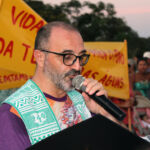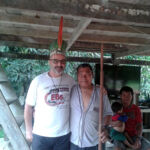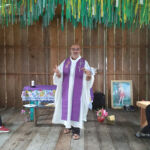

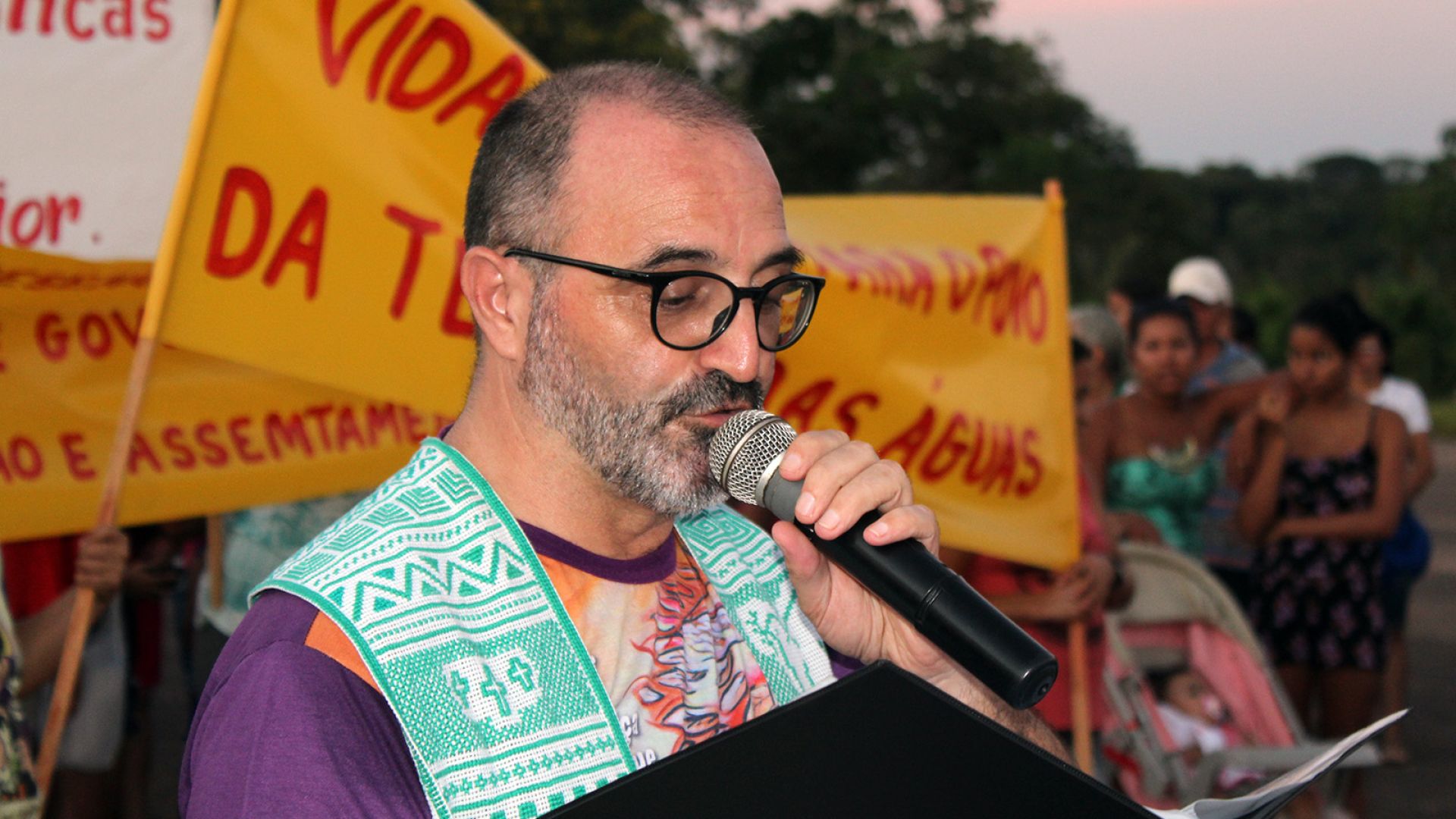
Luis Antonio Fernández Aguado, 62 years old, has extensive experience as a missionary. Ordained a priest in 1987, he was one of the co-founders of the African mission in Sierra Leone in December 1996 and has been serving in the Prelature of Lábrea since 1999, after leaving Sierra Leone in haste due to the civil war.
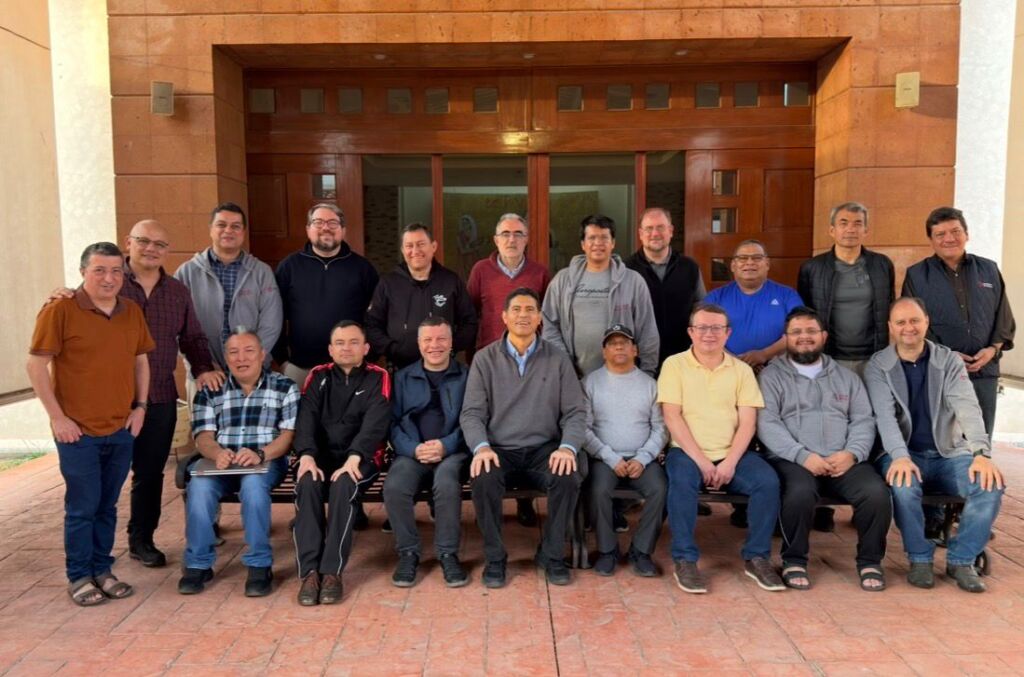
These 26 years of service in the Amazon region of Brazil make him the most senior of all the Augustinian Recollects currently living in one of the three Recollect communities in the Prelature: Labrea, Pauini, and Tapaua. In fact, Luis Antonio is second only to the Bishop Emeritus, also an Augustinian Recollect, Jesús Moraza, who has twice as many years in the mission but serves in a recently established parish where there is no Recollect community.
The Augustinian Recollects are celebrating one hundred years of presence at this mission, a place with unique characteristics that significantly influence the missionaries, their consecrated vocation, and their spiritual life. We spoke with him about all of this.
After so many years of missionary service, what fuels your motivation to continue this commitment in a place with such significant challenges and obstacles?
I think it’s the joy of being part of this story and the feeling that we still have much to do. Of course, it’s quite a challenge, especially given the changes we’re experiencing today and the cries that Pope Francis highlighted in his post-synodal document, Beloved Amazon.
I am very motivated to be in a Church that is both poor and alive, with its lights and shadows, in this special biome that is necessary for all human beings who inhabit the planet; I am motivated by this direct contact with nature.
And I am very motivated to recognize and be aware that all these years in the Prelature have helped me to grow as a human being.
What sustains my vocational experience and my missionary spirituality is God’s unconditional love for me, for every person, for all his creatures. My driving force for action and spiritual life is the centrality of Jesus, of his Gospel, and mission understood as service to that Kingdom of abundant life that Jesus desires for everyone and everything.
I find great meaning in recognizing God’s presence in the historical processes of all peoples. The mission belongs to God, and I see myself more as someone who initiates processes than someone who reaps the rewards. We must respect people’s pace, inspire them with the newness of the Gospel, defend life, be open and committed, but not demand immediate results.
I see myself here happy, training and initiating new missionary disciples in the service of the Kingdom in their own land and with their own people.
After this long experience of almost three decades, what ecclesial tasks do you think are essential, those that should not be lost?
I am a fan of the Synod for the Amazon, of the integral vision it offers of the mission, in which everything is intertwined: the personal, the social, the cultural, the ecological and the ecclesial.
From this point on, these four aspects were always very important to me, and should never be overlooked:
- The formation and accompaniment of lay leaders, as subjects and real protagonists of our Amazonian Church.
- To advance in the ecclesial model of small, locally sized communities, capable of uniting faith and life, of uniting people and families from specific places in specific environments, of small human size.
- To implement a process of initiation into the Christian life that makes us followers of Jesus in a much more conscious and committed way to the Kingdom. In fact, in recent years, this has been the Prelature’s priority. Our Church is lay; its strength comes from the laity. Without them, it would never be what it is.
- Finally, the hallmark of our Church should be to promote and defend the lives of the most vulnerable: indigenous peoples, river dwellers, and inhabitants of excluded urban peripheries; and also to be defenders of their Common Home, from an integral ecology: without the rainforest, they could not live.
I believe that of the four points, this last one is the one in which we must make the greatest effort because it is the one in which we fall most short. It implies taking a stronger stance on the pastoral and social organizations of the Church, such as the Indigenous Missionary Council (CIMI), the Land Pastoral Commission (CPT), the Pan-Amazonian Ecclesial Network (REPAM), and all the other many and varied social ministries (for children, the elderly, babies and pregnant women, the sick, those suffering from alcohol or drug addictions)… It is the most effective way to show a God who is real, concrete, everyday love, close to each person.
At the Lábrea Mission, some religious with many years of service in the Amazon live alongside others who have recently arrived. How do you see the integration process for the newly arrived missionaries?
I am concerned because we are not taking the necessary care of their integration into this community. They arrive without any prior preparation, and we don’t make enough effort to ensure that before beginning their work they learn the history of the people they are coming to serve, become familiar with its culture, or even understand the history of the Church in the Prelature of Labrea.
They also lack sufficient command of the Portuguese language, both spoken and written. This is an area where they fall short, and it significantly impacts their own ministerial experience and their interactions with the people upon arrival.
I believe they should undergo a period of prior theoretical preparation, which should then be complemented by more experiential learning. Without prior initiation and guidance, they may feel disoriented, discouraged, and ill-suited to reality; it can even lead to conflicts arising among missionaries in our communities, as well as between newcomers and the people they serve.
I must also say that they contribute their greatest external identity as Augustinian Recollect religious, who value community life, and undoubtedly, they leave us in our communities with the joy of their youth.
They also bring a great cultural and human wealth, since the new missionaries come from very diverse backgrounds, mostly Latin American, making our communities more global and rich in that sense.
Answer these questions briefly and concisely:
- How would you summarize your experience in the Brazilian Amazon? Gratitude.
- Which value is most important in the mission? Openness + Delivery = Service
- What should an Augustinian Recollect missionary be like? Humble and simple.
- What do you admire most about your fellow missionaries? Availability
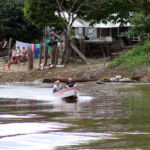
- What ecclesial task calls to you most and inspires the most happiness? Care for riverside communities
- What has been your biggest challenge in the Amazon? My own fears
- What word represents your hope in the Amazonian Church? Laity
- How would you explain what a basic ecclesial community is? The poor as an ecclesial subject
- How do you try to live Christian spirituality here? Holistic experience
- Define in one word the centuries-old mission of Lábrea Growing.