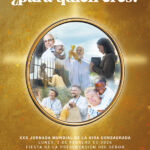

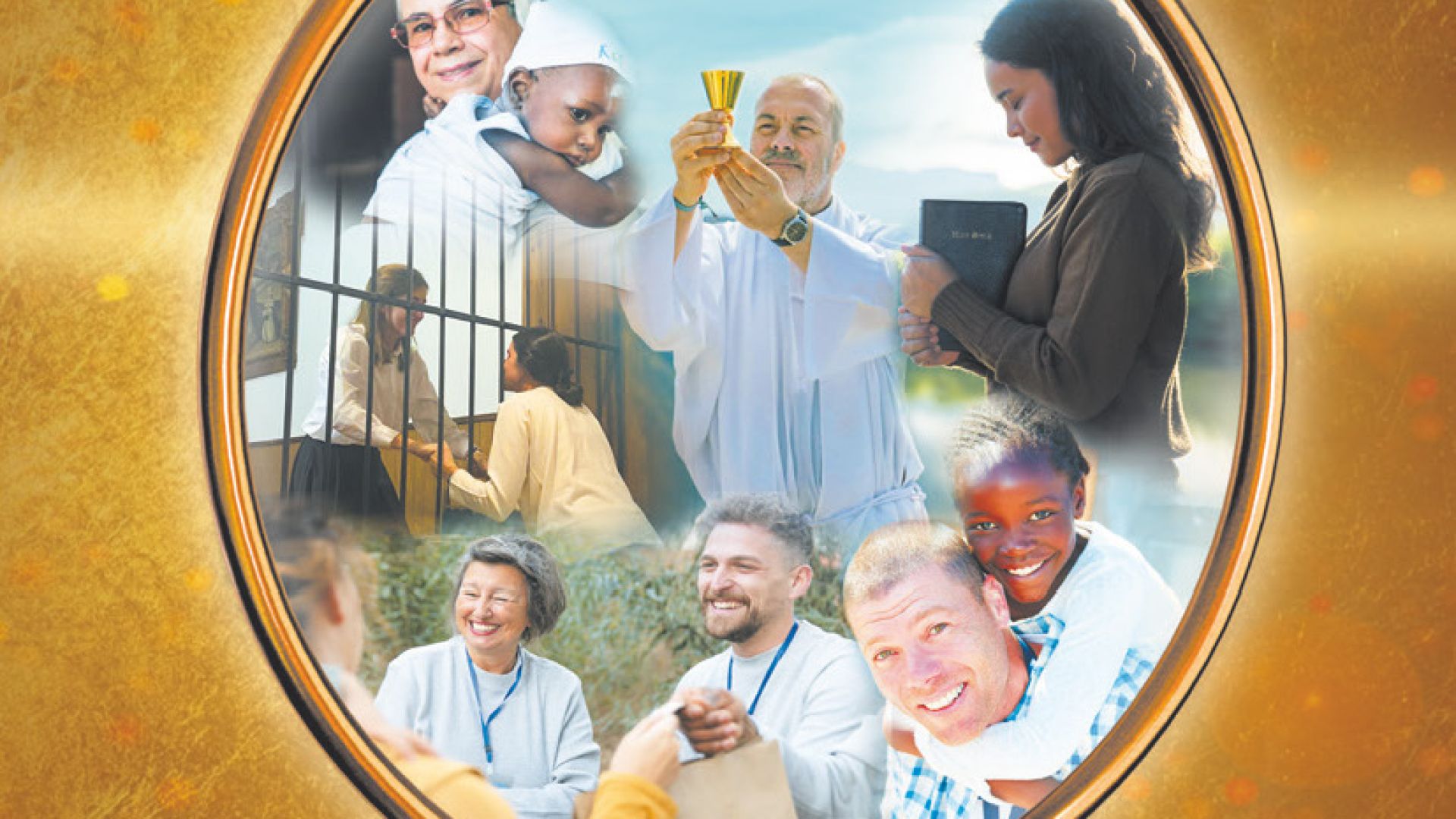
For whom are you? This question pierces and reveals the very core of consecrated life. It unveils the meaning of consecration: not belonging to oneself, not establishing one’s own project, but referring one’s entire existence to Another. It is not an escape from the world, but a way of inhabiting it from God’s perspective.
Religious consecration is a dialogical event. It arises from the encounter between God’s call and the free and conscious response of the one who feels summoned. There is no competition, rivalry, or argument, but rather communion. It does not negate or homogenize the individual, but rather guides, unifies, and proposes a framework for meaning. Far from obscuring the personality, it purifies it and leads it to its deepest truth.
Religious profession is a public expression, the visible sign of an inner commitment, but it is not the endpoint of consecration, which is progressive: it includes concrete choices, renunciations, and goals throughout a life program.
Since life revolves not around the self, but around God, it becomes a concrete embodiment of His love. The consecrated person is called to be the presence of Christ in the face of all pain, suffering, and injustice. The opposites of consecration are self-sufficiency, the instinct for self-preservation, withdrawal, and self-serving relationships.
Edith Stein (1891-1942), philosopher, mystic, martyr, and Discalced Carmelite saint, when taken from her monastery to an unknown destination—a concentration camp—said: “I don’t know where we are going, but I do know with whom we are going.” Because of her consecration, she knew she was going with the One who always accompanied and guided her.
This awareness broadens your horizons. By recognizing that your life project is not absolute, you can connect it with community projects, those of your religious family, the Church, and the Kingdom of God. Every closed project and narrow-minded approach impoverishes, but consecration leads to total and unconditional availability.
Mission and task are not the same thing. A mission isn’t limited to a single form or a specific project; tasks change over time. A mission is ongoing, and its fulfillment is assessed daily. You can perform tasks continuously without fulfilling the mission.
The mission arises from consecration and centers on bearing witness to Jesus through one’s life. It is based on a twofold belonging: we are for the Lord, and we are for others. The consecrated person is a point, a node, in that living network of the Church that brings the Gospel to all. Without this awareness of interconnectedness, of being part of a community of fraternity and service, it is not possible to be consecrated or to discern God’s will.
Within their mission, consecrated persons have an inescapable commitment: not to look the other way or pass by suffering. The Gospel is the compass and invites us to change our perspective, adopt new viewpoints, discover new needs, and shed light on what has remained hidden.
Structures and frameworks can also hinder, stifle, and betray the development of consecration. Throughout history, consecration has changed its face and forms; today it cannot be lived as it was in the 12th, 16th, or 19th centuries. Each era has its own way of being consecrated.
Consecrated life does not exist apart from society. It occupies prophetic positions; it is in the world to enlighten it. In the Augustinian tradition, there is a formula that allows us to update the charism for the present: bene vivere, bene orare, bene studere. Living well means maintaining a coherent, authentic, and fully human life. Praying well means cultivating a healthy and profound relationship with God. Studying well means listening to the Inner Teacher and understanding His Word and the world.
The Galleria Borghese in Rome houses the sculpture “Truth Revealed by Time” by Gian Lorenzo Bernini. Truth is a young woman discovered—unveiled—by the hand of Time. It is like a consecration: a truth that unfolds throughout history through the small stories of each day.
Time eventually confirms the truth; and if we remain faithful in our daily lives to consecration through prayer, service, or love, that profound sense of surrender will become visible: it is not our own strength, but communion with the Truth that calls, sustains, and reveals itself to the world in the life of the consecrated person.
The theme of the 2026 Day of Consecrated Life remains and is renewed every day: For whom are you? If the answer, “for the Lord and, in Him, for others,” is clear, consecrated life will be a shining sign of hope for all.