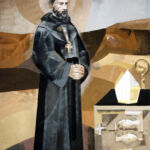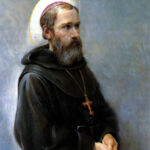

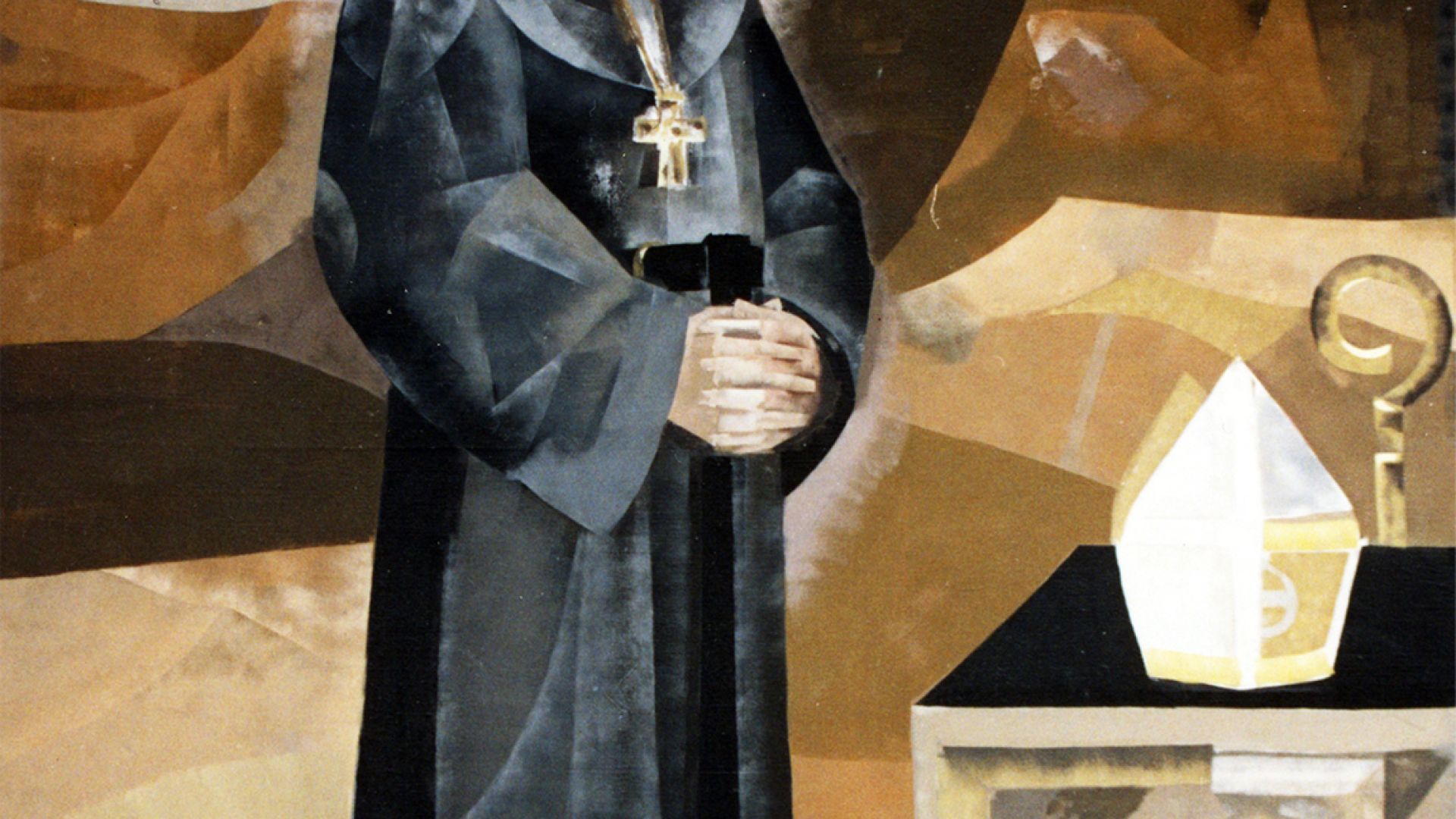
Saint Ezekiel Moreno (1848–1906) was distinguished by his radical commitment to the Gospel, his firm defense of human dignity and his way of facing challenges such as exclusionary ideologies, wars, epidemics or widespread inequality.
Radical liberalism was triumphing, and he, as bishop, reminded everyone that such an ideology “leads to error under the guise of freedom.” He was very close to the people, demanding the common good from the authorities and insisting on truth as the only path to true justice.
Today the challenge comes through Artificial Intelligence and its conversational tools, the extraction and management of big data, predictive or generative models, the automation and autonomy of machines, neurotechnology…
All of this has consequences for human freedom: once again, radical “liberalism”, under the name of progress and technology, can cause injustices, inequalities, and even the denial of truth as something objective, common, and verifiable.
Saint Ezekiel Moreno never imagined the digital age, but his unconditional defense of the truth, his fight against uniformity of thought, his commitment to human dignity, his profound spirituality and his vision of the person as a free and transcendent being serve today as they served him in his time.
Squeeze us with our data
Cameras, sensors, biometric algorithms, facial recognition techniques, and connected devices form the network of “surveillance capitalism”: we individuals are the raw material for the economic benefit of a few.
Saint Ezekiel fought against the imposition of a single, dominant way of thinking; today, economic power controls people through their data. We have become measurable, classifiable, and exploitable objects. We need to safeguard the freedom, privacy, and dignity that Ezekiel defended, quoting John 8:32: “The truth will set you free.” No one is free if their life, reflected in data, is used to influence them.
That historic struggle of Saint Ezekiel against those who sought to homogenize thought translates today into a warning about the manipulation of behaviors, tastes, and ideologies through opaque algorithms. Imposing this digital prison without walls violates the sanctity of the person, created in the image of God.
Towards absolute control
China already has a scoring system that influences people’s mobility and access to services and opportunities. The state evaluates everyday purchases, expressed opinions, and personal relationships to determine who is a “good citizen.”
Saint Ezekiel insisted that good is not measured by utilitarian or performance criteria: “It is not the world that dictates what is good, but God.” Complete control does not produce virtue, but fear. And regarding the manipulation of behavior by algorithms, Ezekiel supports the teaching of Matthew 6:3: “Do not let your left hand know what your right hand is doing.” Authentic goodness is born of the heart and free will.
To monitor human relations in order to, for example, prevent “bad” and “good” citizens from getting together, would be for Ezekiel to radically deny human fraternity and the commandment of Jesus: “Love one another” (Jn 13:34).
The next frontier lies in neurotechnology, which record and analyze emotions and cognitive patterns through gadgets such as smart glasses, biometric headphones, or brain-computer interfaces for the mental control of devices; with them, we add internal control to external control.
Saint Ezekiel lived the Augustinian spirituality with intensity, centered on interiority: “The heart of man is the temple of God; no one has the right to profane it.” The inner self is sacred and includes conscience, freedom, beliefs, convictions, and desires.
Ezekiel would not approve of any power monitoring and controlling that space reserved for God ‘s action: “Where your treasure is, there your heart will be also” (Mt 6:21). For the saint, only Christ can enter, dialogue with the innermost self, and heal the person.
Hoaxes and mere opinions as points of reference
Information circulates and becomes distorted at great speed. Traditional media, with their verification criteria, now represent a minimal part of news transmission. These are times of post-truth, of presenting opinions as if they were truths, of self-affirmation, sectarianism, and polarization. What I want to be true is true.
Saint Ezekiel reminds us that truth is not negotiable: “Do not be afraid to speak the truth when good demands it.” Faced with manipulation or the substitution of facts with narratives, he would insist on discernment: “Let your ‘Yes’ be ‘Yes,’ and your ‘No’ be ‘No’” (Matthew 5:37).
I would also remind you that the absence of truthful role models leaves us without guidance and makes us vulnerable. Misinformation is most devastating when the heart lacks a firm foundation of trust and a strong guide to its principles and morality.