
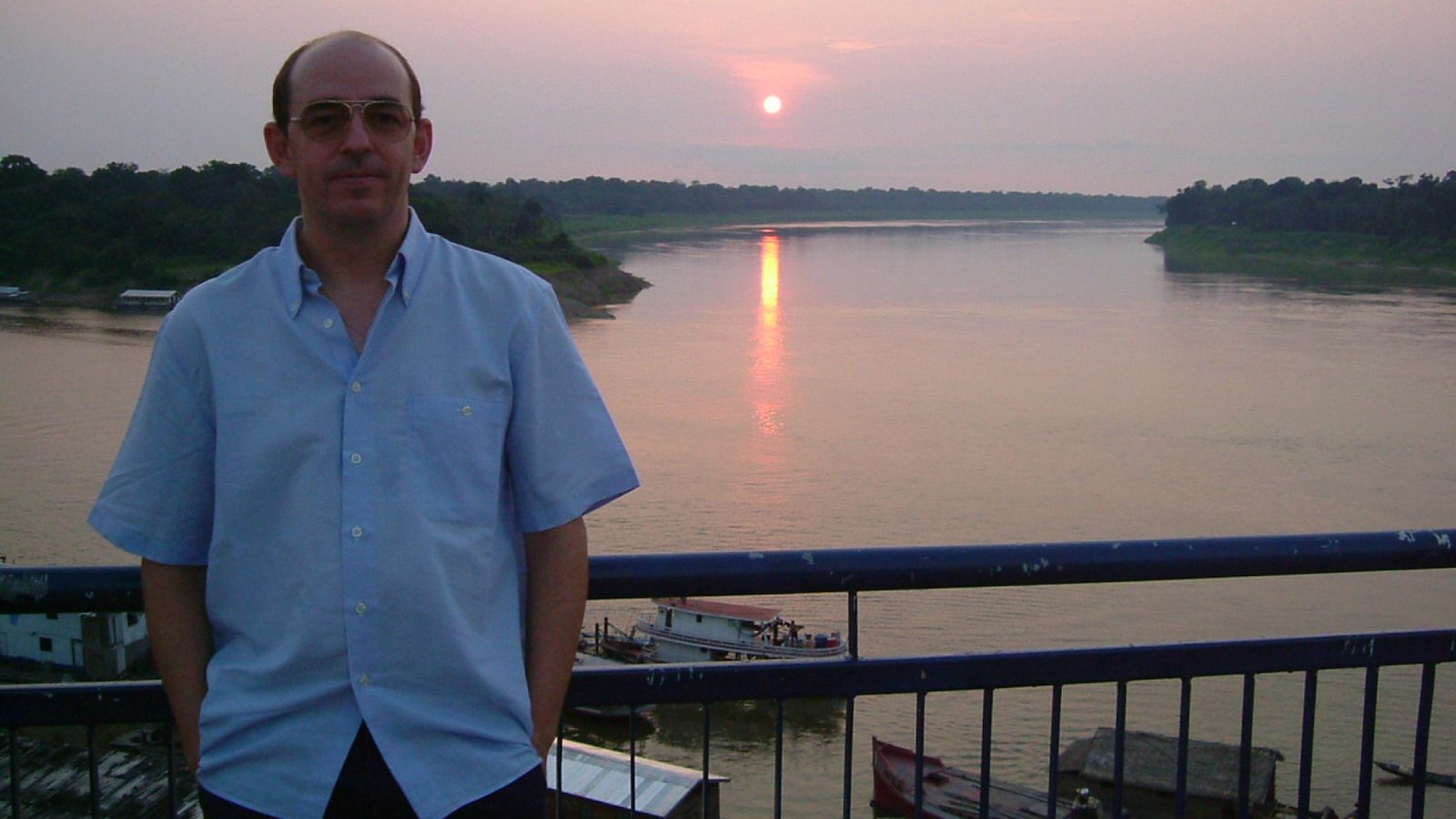
Lábrea (Amazonas, Brazil) has been in the hearts of the Augustinian Recollects for 100 years, ever since the Holy See entrusted them with the care of that land and its people. In my heart, Lábrea has been present since around 1970. I was still a teenager when I first heard about that mission, with the missionaries from the Province of St. Nicholas of Tolentine who had volunteered to help there.
During my early religious formation, I always had missionary dreams: I devoured the news that came from Lábrea and felt increasingly drawn to it. In the following years, as a professed member and priest, I went from dreaming to admiring the witness of our missionaries, whom I saw as heroes on the front lines.
I was fortunate enough to live in the same community with some of the missionaries who had returned to Spain after working at the mission, as well as with others who later went to the mission, which further fueled my interest and missionary zeal.
In my six years as provincial secretary I had the privilege of getting to know for the first time in person each of the communities that we had at that time in the Amazon: Manaus, Tapauá, Canutama, Lábrea and Pauini.
And finally, for three years I lived and realized that missionary dream in Tapauá (two and a half years) and in Manaus (six months), working side by side with its people.
My next assignment, as a formator of young religious men, allowed me to continue collaborating with the mission while accompanying some young Augustinian Recollect in their initial formation period who were experiencing their first missionary insertion during the university holidays.
During the six years that I was provincial prior I had the responsibility of making renewal visits to our missionaries, of talking with each of them and of evaluating the situation and seeing how to improve our service there as a Province.
And now I accompany the mission from the peace and distance of the convent, in Monteagudo (Navarre, Spain), in these last ten years, as prior of the novitiate where our future friars are trained.
With this extensive personal background, I value the path traveled and accomplished so far by the Augustinian Recollects in Lábrea. I believe it has been a very long, difficult, complicated, and demanding journey.
Especially in the early years of the mission, from 1925 onwards, it was disappointing and discouraging. Later it became inspiring and engaging, contagious and stimulating, while also exhausting.
Today I see a clearer path, but one that remains uncertain, full of light and shadow, certainties and questions. I believe that the Order and the Province have poured forth a great deal of energy, youth, life, dedication, and resources throughout these years.
There have undoubtedly been many fruits, achievements, accomplishments, and successes. But it seems to me that we are still in a time of sowing seeds, of beginnings, of attempts, of starting over each time.
Some challenges have been particularly significant. Vast distances and isolation are objective difficulties that no one can avoid. We must accept them as unavoidable. Loneliness and individualism are their direct consequences, and with proper personal and community care, they can be mitigated or alleviated.
The shortage of personnel, the lack of support, and the lack of resources are institutional problems that the Province must address and remedy. The lack of continuity among missionary religious, the frequent changes in mission communities, and the departures and abandonments have severely hampered our missionary work.
Some adversity and hostility are social issues that must be understood in order to succeed in how to function and how to live in that reality, so different for those outside the Amazonian context, which in the case of the Augustinian Recollect missionaries, is all of us.
Personal maturity, community collaboration, and maintaining a certain mental and emotional perspective are necessary to see the plans, lines, and projects that are most convenient and necessary to transform that reality in the light of the Gospel.
The lack of vocations has been a deficit and continues to be a challenge for the Church of Lábrea. More than in other places, the difficulty of vocational work is evident. I believe the greatest failure in the hundred years of the Augustinian Recollects’ mission in Lábrea has been their inability to form their own clergy (there is only one priest native to the region in the Prelature) or to attract vocations to the consecrated life; with a few nuns from the region, there are no monks.
The Church of Lábrea will not reach its maturity until it also begins to produce those fruits of consecrated and priestly life.
But we must also highlight what has sustained and given meaning to the work of the Augustinian Recollect Family in the mission of Lábrea. Fraternity, welcome, community, communion, and human warmth are key elements. Community life is more necessary and sorely missed there than anywhere else where there are communities of the Province of St. Nicholas of Tolentine.
Spirituality, faith in God, trust, and hope are the resource, the refuge, and the lifeline in this challenging world when it comes to dedicating oneself to an apostolate that often tests a person’s strength and convictions.
Personal maturity and clarity of the community project are essential. The Augustinian Recollect missionary in the Amazon must be clear about his purpose, what he wants and can offer, and what is a priority and fundamental aspect of his work; and, in this way, prevent each person from going it alone, inventing their own plans, or choosing what they like, what they feel like doing, what they are best at, what suits them, or what interests them.
Trust and collaboration with the laity is one of the mission’s greatest strengths and assets. Getting to know them, valuing them, and allowing them to embrace their role and leadership in Church life and evangelization is always stimulating and rewarding.
The youthfulness of the mission is a renewing factor. The enthusiasm and joy of youth, the presence of so many young people in our pastoral activities and celebrations, rejuvenates, encourages, and motivates the missionaries.