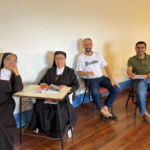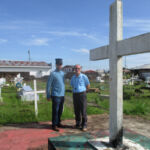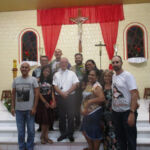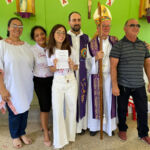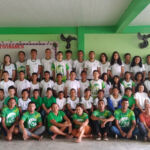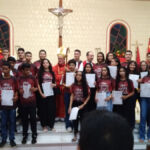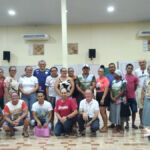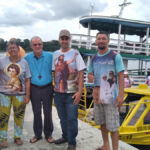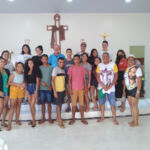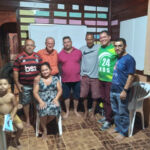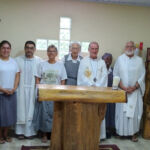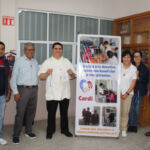

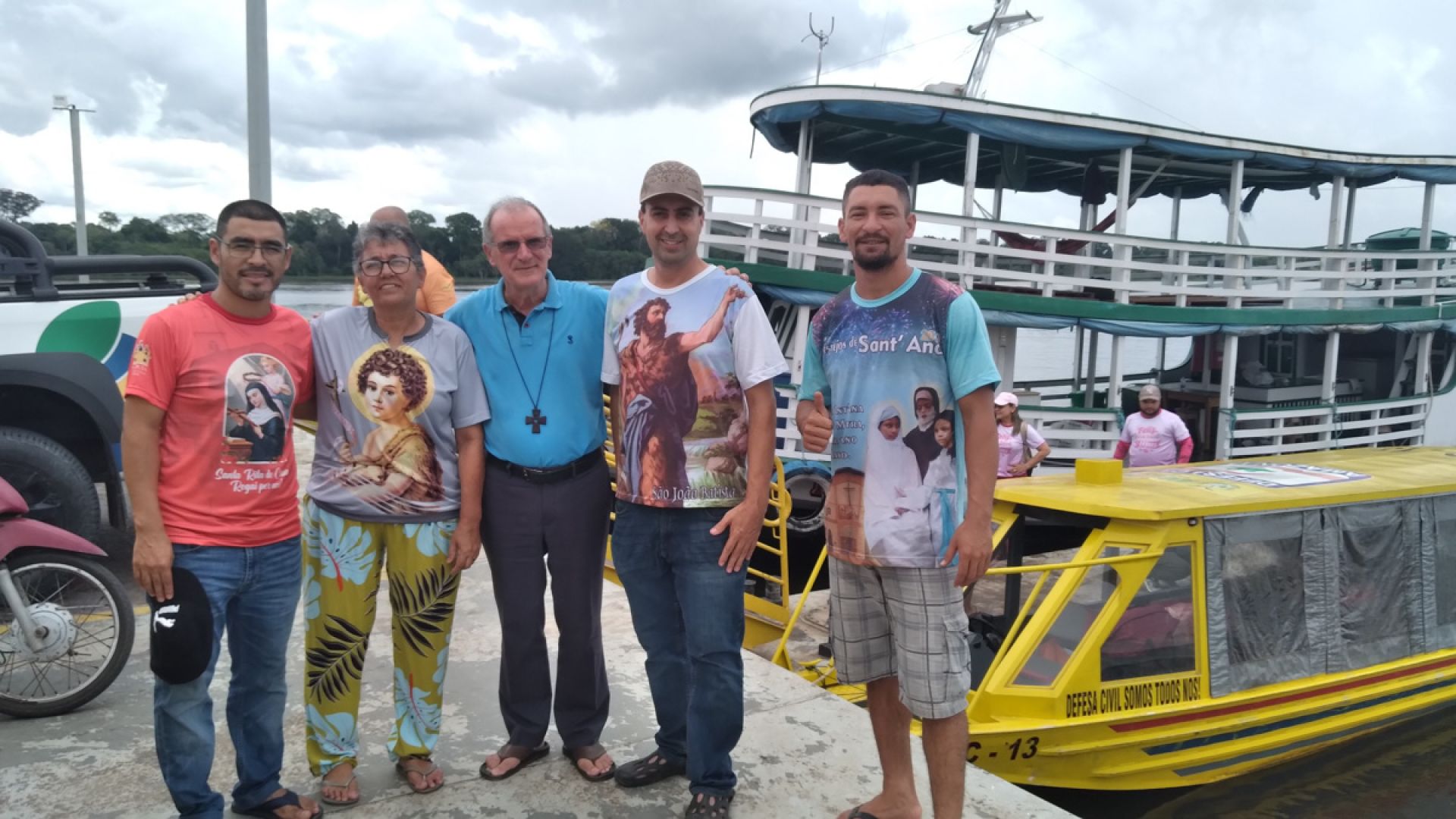
When I arrived in Tapaua, I experienced a mixture of excitement and fear. I knew I was coming to a beautiful but also demanding land. Being a missionary here, in the heart of the Amazon, is a great grace, but it also involves very concrete challenges: human, pastoral, and spiritual.
Certainly, the mission evokes images of the great feats and stories that many of my Augustinian Recollect brothers have accomplished throughout our history. However, mission life in Tapaua challenges the illusions and fantasies of what we are told and see in documentaries and films.
I would say that, rather, it confronts us with the deepest truth of consecrated life: here, one cannot live by appearances, comfortable routines, or imported models. Everything demands authenticity, self-denial, adaptability, and an incarnate faith.
There are several challenges to consecrated and community life. Geographical distance easily becomes emotional and spiritual. There are no roads or paths connecting this place to the outside world. Journeys are long and always by river. We are subject to a hot climate with heavy rain, intense sun, and storms, as well as tropical diseases and dangers along the way.
Living here requires a lot of patience and the ability to wait and learn to live without instant gratification. But it also gives you the joy and feeling of living in a fascinating place, unknown to most.
Being far from other communities, family, and friends demands a strong inner life and a community that is not merely functional, but truly fraternal. This is where we are tested to see if we are brothers and sisters or just fellow missionaries.
In my experience, language was a significant challenge. It often creates a barrier that makes it difficult to understand their way of life and, above all, to connect with their hearts. But it’s also incredibly rewarding to overcome that barrier and communicate with people you never imagined you’d ever talk to.
There are challenges to evangelization. In urban areas, there is a palpable and constant competition among neo-Pentecostals to recruit Catholics. They exert considerable pressure and seek control over all areas and political positions, engaging in extensive lobbying. In rural communities, the Church’s lack of presence is exacerbated by widespread illiteracy, which hinders the formation of sufficient leaders, catechists, and ministers.
In both cases, in the city and in the riverside communities, it is difficult to transmit Catholic identity and some faithful are being lost. But it is a joy and very satisfying to share the faith with so many people who live their love for the Church with simplicity and hope.
Furthermore, there are major social problems: inequality, teenage pregnancies, drugs, prostitution, child abuse, deforestation, and illegal mining. We are experiencing the encroachment of agribusiness and mining. Given the inaction of the authorities, the Church is taking a stand to prevent the advance of deforestation and the pollution caused by mining.
Faced with these realities, sometimes there are no precise answers or immediate solutions, but as a Church we contribute, through the formation of consciences and the support of the parents and students of the Hope Center, ways to reverse everything that disrupts families and society.
This mission can surpass all human expectations. It hasn’t been easy. Fatigue, distance from family, loneliness, and personal limitations weigh heavily. Social problems and cultural differences challenge us. But, in the midst of it all, I haven’t lost the joy of serving.
I have discovered that God walks with us, and the mission has taught me to live with little and to trust more in Providence. Tapaua has taught me that true wealth lies in community. This is not just a mission site, but a school of faith. Here I have learned that the missionary doesn’t come to bring God, because God is already in the people. We come to recognize Him, to accompany Him, and to allow ourselves to be evangelized.
Being a missionary in Tapaua means confronting an exciting and transformative reality. It means understanding that nothing is measured by results, but by daily faithfulness, by concrete love, and by the hope sown, even when we don’t see the fruits.
Being a missionary in Tapaua means learning every day that the mission is not about doing many things, but about loving, remaining, and walking with the people. It is a school of humility, dedication, and trust in God, and the missionary is also evangelized.