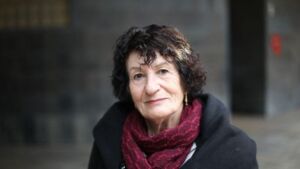

Isabel Escartín began her work in prison ministry as a volunteer while serving at the Parish of Saint Monica of the Augustinian Recollects in Saragossa (Aragon, Spain). She decided to dedicate her time and heart to accompanying those who are incarcerated.
Over the years, this commitment has led her to be the delegate of Prison Ministry of the Diocese of Saragossa for more than ten years, a mission that has transformed her perspective and her life.
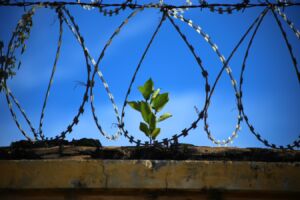
The Jubilee Pilgrims of Hope 2025 reminds that God’s mercy knows no walls or bars. Through Prison Ministry, the Church is present in a place where hope must never be extinguished, bringing light and reconciliation.
This jubilee time of grace is an opportunity to look with new eyes at these brothers of ours who suffer deprivation of liberty for bad decisions in their past, to build bridges with them and to believe that a new beginning full of hope is possible for everyone with support and accompaniment.
Why did you join and what have you done as a prison pastoral agent?
My first contact with the prison system was for work: I worked as a substitute nurse at the Torrero Penitentiary Center in Saragossa. At the time, I saw it as just another experience, similar to working in hospitals or in places where I volunteered, like the Congo or Calcutta. It wasn’t anything extraordinary; it was simply caring for people with health needs, like anyone else.
Years later, while passing by the Parish of Saint Monica, I saw a poster announcing a meeting about the reality of prisons. I went in, participated, and, as I tend to be very active, someone invited me to attend a meeting the following day at the Government of Aragon.
There, they were discussing the situation of prisoners over 75 years old and people with mental illness. I must have contributed something, because they singled me out and asked me to work on mental health in the prisons of Aragon. My answer was sincere:
— “I’m a midwife, I can attend births, but I know nothing about mental health.”
And they answered me:
— “You’ll manage.”
And so it was. Shortly after, together with Dr. José María Civeira, a wise and generous psychiatrist, and a another person in charge of Prison Ministry, we sat down in a park in Madrid to design a mental health course for prisons. The year was 2000.
That course continues to be taught in prisons in Aragon and other parts of Spain. Since then, our work has consisted of supporting, training, and instilling hope in those who need it most.
I would especially highlight the program that has been carried out for all these years by the Parish of Saint Monica to visit the inmates hospitalized in the penitentiary area of the Miguel Servet Hospital.
What has this experience with the prison system meant to you?
This experience has profoundly marked my life. I am convinced that prisons are where God wanted me to be. Without Jesus Christ and the Gospel, my life would be meaningless and very different… Honestly, I don’t like what I see when I imagine my life without Him. The Gospel has been the light that has guided every step on this path.
The Jubilee of Hope is precisely that: an invitation to sow hope. For those deprived of their freedom, it means opening up the possibility of a better future in this world and, above all, the certainty of an “afterlife” in Christ.
For those of us who work with incarcerated individuals, it’s a reminder that our daily mission is to offer them hope, both human and spiritual. We are committed to it.
My view of prison hasn’t changed much in all these years of working in prisons. The people there have committed crimes, as we all have, and they need to make amends and heal. Although prison is viewed very negatively by those who suffer there, I believe it can be a healing space: many find God and themselves there. I’ve seen this with my own eyes, and I firmly believe it.
I don’t expect any special things from the Jubilee, but I trust that God will grant the grace of conversion and hope, both to the inmates and to those of us who accompany them, and that this light will also reach the whole world.