

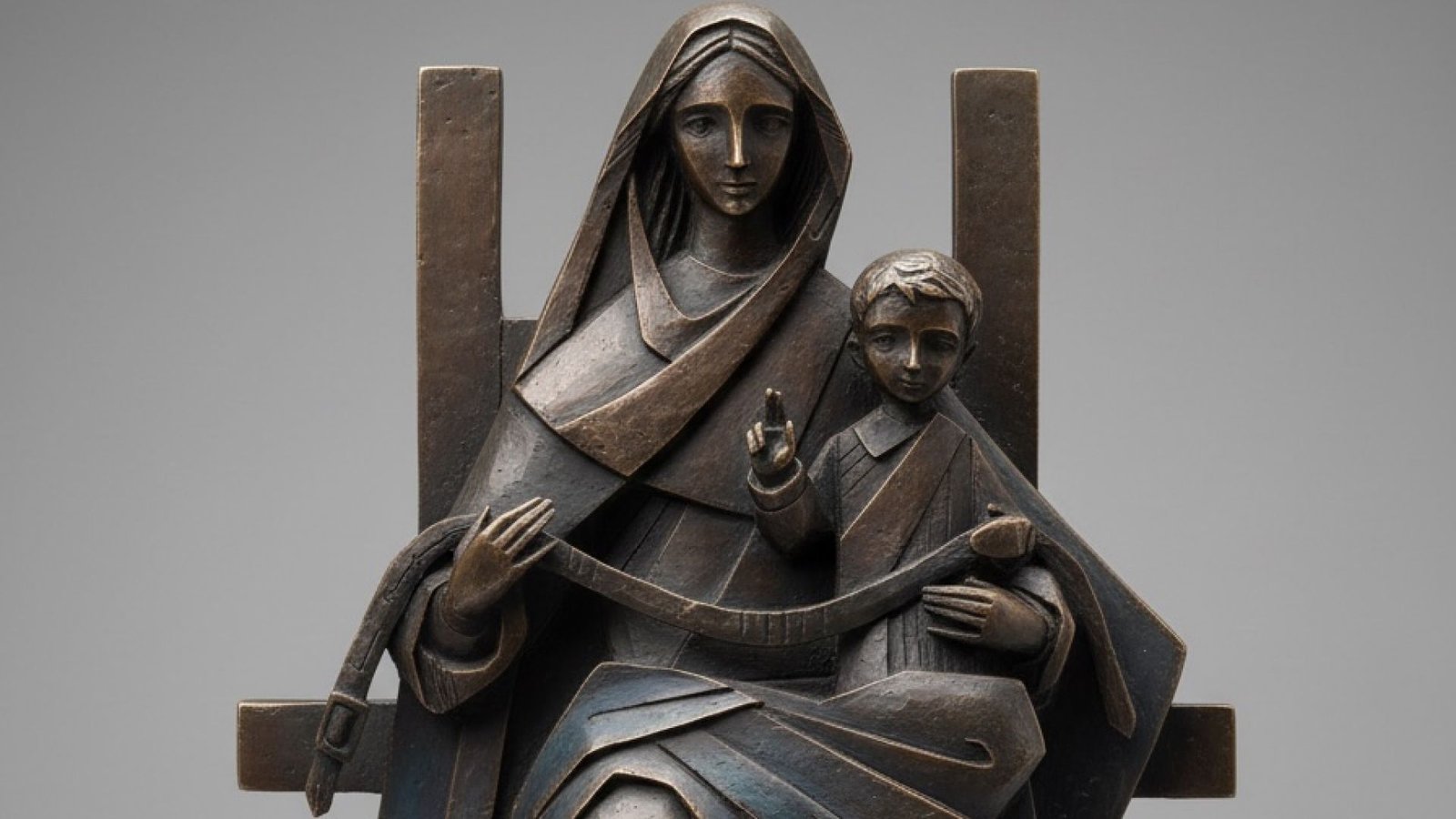
On the feast of Our Lady of Consolation, Saint Alonso de Orozco places on Mary’s lips an invitation that directly recalls Jesus: to draw near to her with our burdens to find consolation. Friar Alfonso Dávila reflects on a devotion that does not end with us: whoever experiences God’s consolation is also called to become a source of consolation for others.
What does it mean to call Mary Our Lady of Consolation? A reflection on allowing ourselves to be consoled by God so that we may become consolation for others.
There are days when the Office of Readings is better accompanied than others. Those of us who pray it regularly know that some texts pass without leaving much of a trace, while others manage to make us pause. The one for the feast of Our Lady of Consolation belongs, for me, to this second group.
It is a fragment from Saint Alonso de Orozco, a saint from Madrid, an Augustinian, and founder of the Augustinian Nuns and the Augustinian Recollect Nuns of enclosure. The language inevitably shows the passage of centuries, but it contains an image that seems precious to me for understanding what it means to call Mary Mother of Consolation.
Saint Alonso writes:
“Our Lady, Mother of Mercy, imitating her precious Son, takes the same words and says: «Come, afflicted Christians, come to me, and I will refresh you»”.
I especially like that beginning: “imitating her precious Son”. Mary can console because she has first known the consolation that comes from God. She does not offer something different from Christ nor does she lead to herself. She makes Jesus’ words her own and leads us to Him.
We also need consolation
Perhaps one of the hardest things for us to admit is that we need to be consoled.
We are accustomed to speaking of accompanying, helping, serving, listening, or caring. Especially those of us with pastoral responsibilities can become accustomed to thinking that our place is always on the other side: it is we who must be available to others.
But we also have bad days. We also carry worries, disappointments, losses, uncertainties, weariness, and wounds that we do not always share.
And it is beautiful that Christian spirituality does not demand that we hide all of that.
The Virgin presented by Saint Alonso de Orozco does not tell us to go to her when we have sorted out our lives. She calls us precisely when we are afflicted. She invites us to approach with what weighs us down.
God’s consolation does not mean that problems magically disappear. Mary stood at the foot of the cross, and the cross remained a cross. But her presence reminds us of something fundamental: suffering can be accompanied.
We need to allow ourselves to be consoled. We need to experience again that, even amidst what we do not understand, we are still loved by God.
Becoming God’s Consolation
But the feast of Our Lady of Consolation cannot end there.
The Augustinian Recollect Family begins a special period of preparation for the centenary of the Order’s consecration to Our Lady of Consolation, carried out in 1926. The Prior General has invited us to live this journey through three verbs: remember, renew, and revive. And he has insisted that this anniversary cannot remain an intimate devotion.
There is an expression of his that I find particularly provocative:
“Consolation must also smell of the poor; it must smell of the wounds of the disconsolate and the tears of those who suffer.”
There appears the other half of our devotion to the Virgin of Consolation.
It is not enough to feel consoled. We are called to console.
And to console does not necessarily mean to solve someone’s problems. Many times we will not be able to. To console can be to listen, to remain, to call, to embrace, to accompany, to visit. It can simply consist of making the other person feel, through our presence, something that God never ceases to repeat to them: you are not alone.
That is why this centenary can become something much deeper than a historical commemoration. The Prior General invites us to “prepare, above all, our hearts,” because the consolation we receive from God is called to become a mission.
Perhaps during these months we could ask ourselves two very simple questions: where do I need to experience God’s consolation today? And for whom can I become His consolation?
Saint Alonso de Orozco presents Mary calling those who are afflicted. We can go to her with what weighs us down, with our wounds and weariness. But afterwards, we will have to turn our gaze towards those beside us.
Because whoever knows they are consoled also discovers the responsibility to console.
And perhaps that is why few prayers can better express what we wish to live during this time:
“Mother of Consolation, make us instruments of God’s consolation.”


