
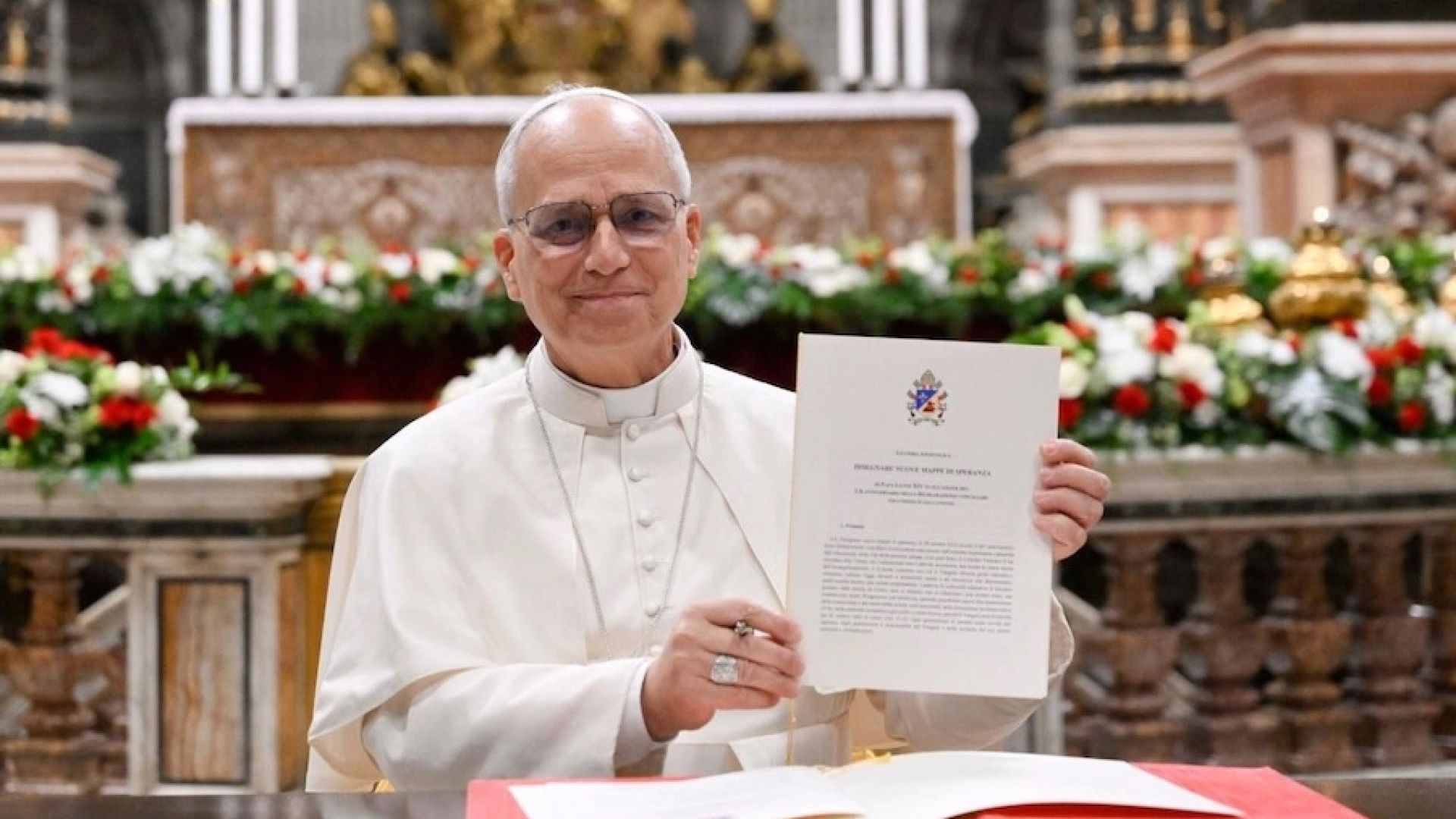
Pope Leo XIV’s Apostolic Letter, Designing New Maps of Hope, published on the occasion of the sixtieth anniversary of Pope Paul VI’s Declaration on Christian Education Gravissimum educationis (October 28, 1965), invites us to return to the heart of education as a human, social, and spiritual task. The Pope states from the outset that “education is not an accessory activity, but constitutes the very fabric of evangelization: it is the concrete form with which the Gospel becomes an educational gesture, relationship, culture” (1.1). This statement situates education as a space where faith becomes experience, coexistence, and shared horizon. It is not about defending school structures per se, but about understanding that, wherever human growth is accompanied, a culture of encounter and life is being built.
The document highlights that the Church has historically generated “educational constellations” (1.2): diverse, creative realities adapted to their contexts, which have been able to unite faith and reason, thought and life, knowledge and justice. Among these sources, the Augustinian tradition appears as a constant inspiration, not to focus only on it, but to show an anthropological and pedagogical key that retains its strength. Saint Augustine understood that the authentic teacher does not impose the truth, but helps to seek it from within. The Letter recalls this dynamic when it affirms that in the Catholic school “the heart dialogues with the heart, and the method is that of listening that recognizes the other as a good” (3.1). This perspective is opposed to haste, standardization, and education reduced to quantifiable results. Educating is, above all, an encounter.
Pope Leo XIV insists that “educating is an act of hope and a passion that is renewed because it manifests the promise that we see in the future of humanity” (3.2). This act of hope requires looking at each person as unique. Therefore, he warns, forcefully, that “a person is not a ‘skills profile’, is not reduced to a predictable algorithm, but is a face, a history, a vocation” (4.1). In times when educational systems tend to measure, compare, and classify, these words remind us that the center of education is always the integral development of the learner.
The document also emphasizes the responsibility of educators. It is not enough to teach content; a vocation of accompaniment is needed. It affirms that the Catholic school “is not simply an institution, but a living environment in which the Christian vision permeates each discipline and each interaction” (5.2). This requires teachers with scientific and pedagogical preparation, but also with human and spiritual sensitivity. Educating implies knowing how to listen, encourage, discern, and support.
The Apostolic Letter also dedicates central attention to the family in the educational process. The Pope recalls that “the family remains the first educational place” (5.3), not only for the transmission of values, but because it is there where the person learns to be looked at with dignity, listened to, welcomed, and accompanied. The school—the Pope points out—does not replace the family, but collaborates with it from an “educational alliance that requires intentionality, listening, and co-responsibility” (5.3). This perspective invites us to strengthen the links between teachers and families, to generate spaces for real and not only administrative encounters, and to cultivate mutual trust as the foundation of personal and community growth. In a time when many family structures are weakened, this call is especially relevant: without family, education loses its roots; without school, the family loses its horizon; together, they can sustain a path of shared humanity.
One of the most significant current challenges is the digital environment. The Letter warns that technologies, if not properly oriented, can fragment attention and impoverish relationships. However, the answer is not to reject them, but to integrate them with discernment. Therefore, it affirms that “our attitude towards technology can never be hostile, because “technological progress is part of God’s plan for creation” (9.2). The decisive question is not the tool, but the way in which it is put at the service of the person and the common good.
The Pope also proposes three educational priorities for our time. Among them is the need for interior spaces: “Young people ask for depth; they need spaces for silence, discernment, dialogue with conscience and with God” (10.3). This statement directly challenges all educational institutions, which are called to generate environments that not only transmit knowledge, but allow us to understand our own lives, orient them, and give them meaning.
The Letter concludes with a programmatic and deeply human invitation: “Disarm words, lift your gaze, guard your heart” (11.2). These are three gestures for another way of educating: a word that does not hurt, but accompanies; a gaze capable of seeing beyond the immediate; a heart that does not harden, but opens to hope. Designing new maps of hope, as the Pope proposes, means believing that each person can grow, understand, love, and transform. It means educating not for competition, but for communion; not for survival, but for human fullness.
Education, today more than ever, is revealed as an essential task to sustain dignity, fraternity, and the future. Wherever there is deep education, listening, and trust, a new world is born. To educate is to believe in it before it exists and to work to make it possible.