
The gospel of Christmas Eve does not seek to describe a birth; Friar Luciano Audusio explains its deeper meaning. In the child of Bethlehem, Saint Luke confesses that God fulfills his promises, subverts the logic of power, and offers a salvation that is born in smallness, fragility, and gift.
The manger as a revelation of the Kingdom
The gospel of Christmas Eve does not simply want to inform us of how Jesus was born, but to reveal what it means that he was born. Saint Luke constructs his account as a Christian midrash, a believing re-reading of the Scriptures of Israel to confess that, in this child, God fulfills his promises and redefines history.
The story begins with a name laden with power: Caesar Augustus. For the world of that time, he was the savior and the lord, guarantor of universal peace. The census expressed that dominion: to count in order to possess, to register in order to control. But Luke subverts this logic from the first line. While the emperor proclaims himself savior (σωτήρ), the true Savior is born without being counted; while the lord of the empire governs from Rome, the true Lord (κύριος) lies in a manger in Bethlehem. The kingdom of God silently displaces the kingdom of Caesar.
God chooses the small and the vulnerable
The journey of Joseph and Mary to Bethlehem is not only obedience to a decree; it is fulfillment of Scripture: «Bethlehem Ephrathah, little among the clans of Judah…» (Mic 5:2). God chooses the small again. Jesus is born in the city of David, but his royalty will be radically different: he will not impose, but summon; he will not dominate, but serve.
Luke emphasizes that Mary gives birth to her firstborn (πρωτότοκον). It is not a biological fact, but a theological title. As Israel was called «my firstborn son» (Ex 4:22), Jesus appears as the beginning of a reconciled humanity.
And the heart of the story is revealing: «there was no room for them in the inn (κατάλυμα)». The lack of space is not an accident, but an accusation. The creative Logos finds no place in his creation. The manger anticipates the cross: he who had no place at birth will create a place by giving himself to the end.
The peace that is not born of power
The signs offered as a signal are disconcerting: swaddling clothes and a manger. The swaddling clothes refer to common humanity; the manger (φάτνη), place of animal food, evokes Isaiah: «The ox knows its owner…» (Is 1:3). Now, in that same place, lies the Bread of Life.
That is why the first recipients of the announcement are the shepherds: socially marginalized, but full of biblical memory. They are the first to find the definitive Shepherd, the new David who gathers the scattered sheep.
The divine manifestation follows the pattern of theophanies: glory, fear, and word. The glory of the Lord (δόξα κυρίου) envelops them and transforms fear into great joy (χαρὰ μεγάλη). The promise is fulfilled: «The Lord your God is in your midst» (Zeph 3:17). God no longer dwells in the temple, but in the open night of history.
The angelic announcement condenses all of Lucan Christology: Savior, Christ, Lord. Everything converges in a defenseless child. The sign contradicts all triumphalist expectations: the Messiah does not come armed, but wrapped in swaddling clothes.
The final song proclaims a peace that is not that of the empire: «peace on earth to men of his good will». Not human conquest, but free gift. It is the biblical shalom: total reconciliation.
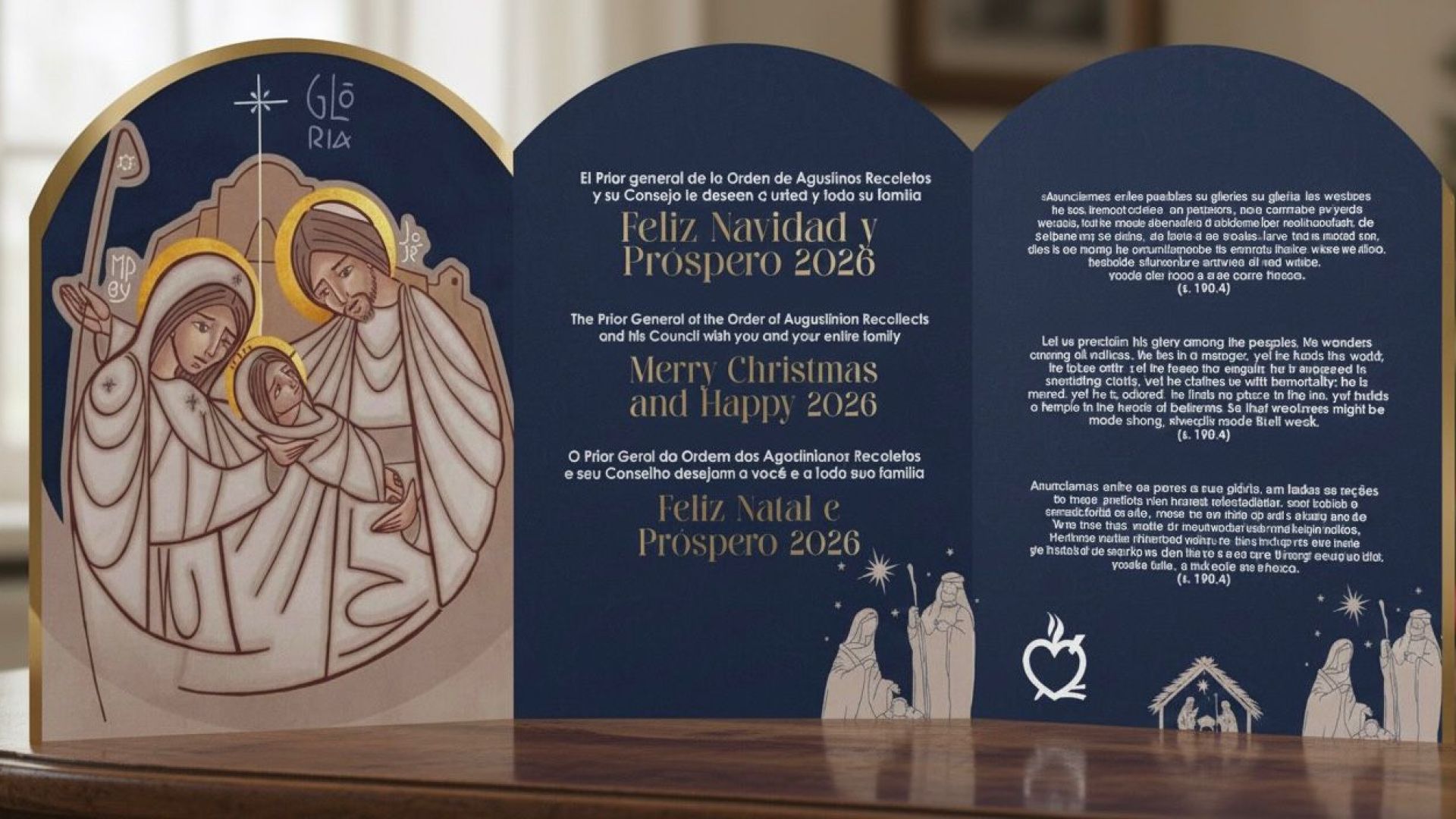
Tonight, the manger becomes a chair. God teaches that one does not ascend to heaven by force, but that heaven descends by love. Like the shepherds, we are called to make room for the God who makes himself small.